

The new technology shift has given us new tools to rethink value creation and capture, in other words, how we solve problems and how we get paid for solving them. We analyze the strategies of bundling and unbundling that businesses have historically used and that AI companies use today to invent new business models.
Find all the lessons in the Economics of AI here and the previous lesson below.
Lesson 4: Enterprise's Slow Path from Automation to Disruption

Enterprises are slow to adapt to change and new technologies. They are risk-averse, inefficient, and overcrowded with bureaucracy. In this lesson, we break down the three-part process enterprises take to adopt and deploy new technology,
The Golden Age’s mission is to build a more peaceful and prosperous world by popularizing and applying first-principles thinking to the problems around us.
Join our community of first-principles thinkers, builders, and investors.
Strategic Horizon: Unbundling, Disruption, and New Economic Models
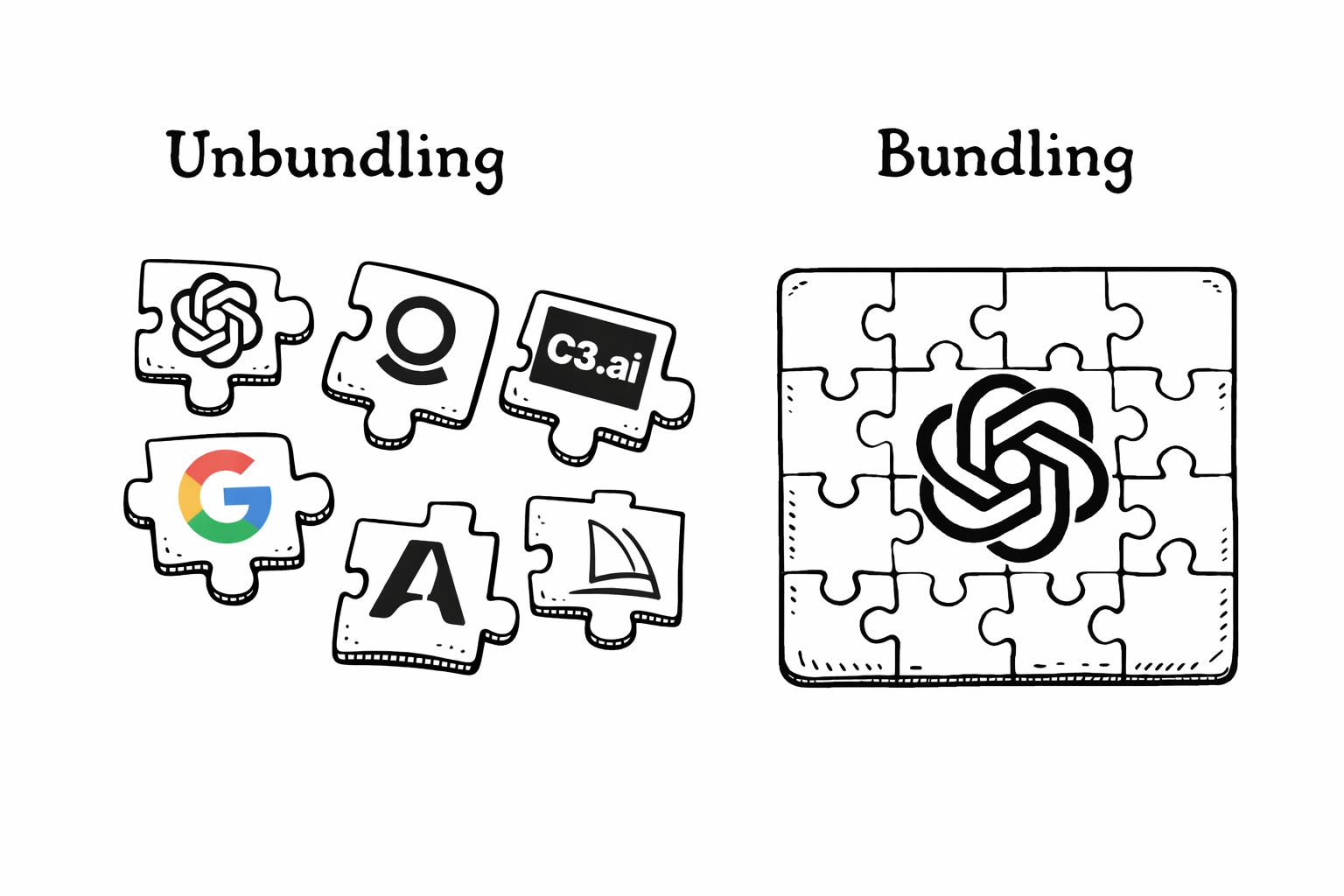
What existing product and service bundles will large language models (LLMs) unbundle?
And what new forms of aggregation and value creation will they enable?
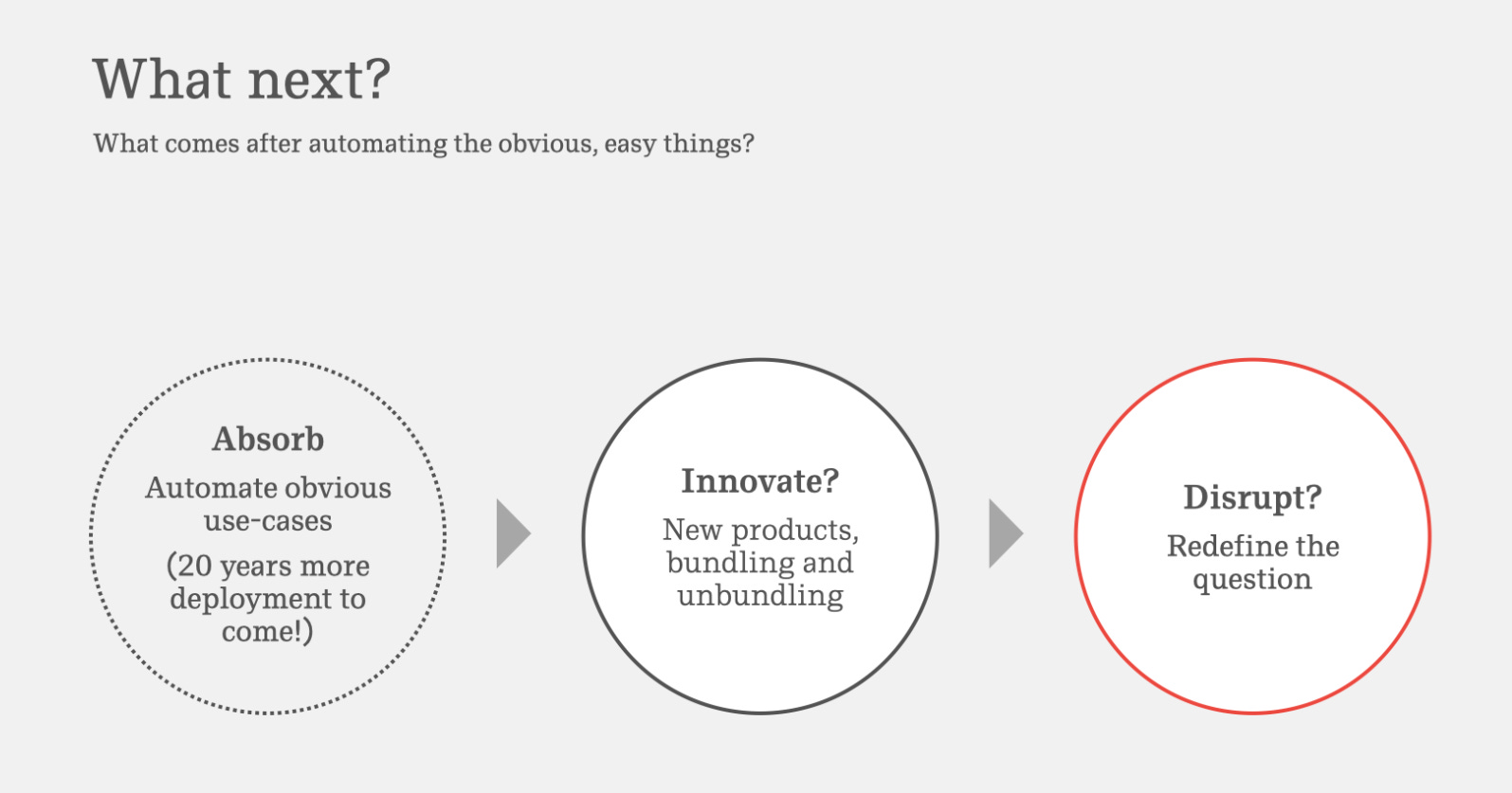
The primary strategic challenge for businesses today is to think beyond simple automation and envision how generative AI will fundamentally innovate and disrupt existing markets.
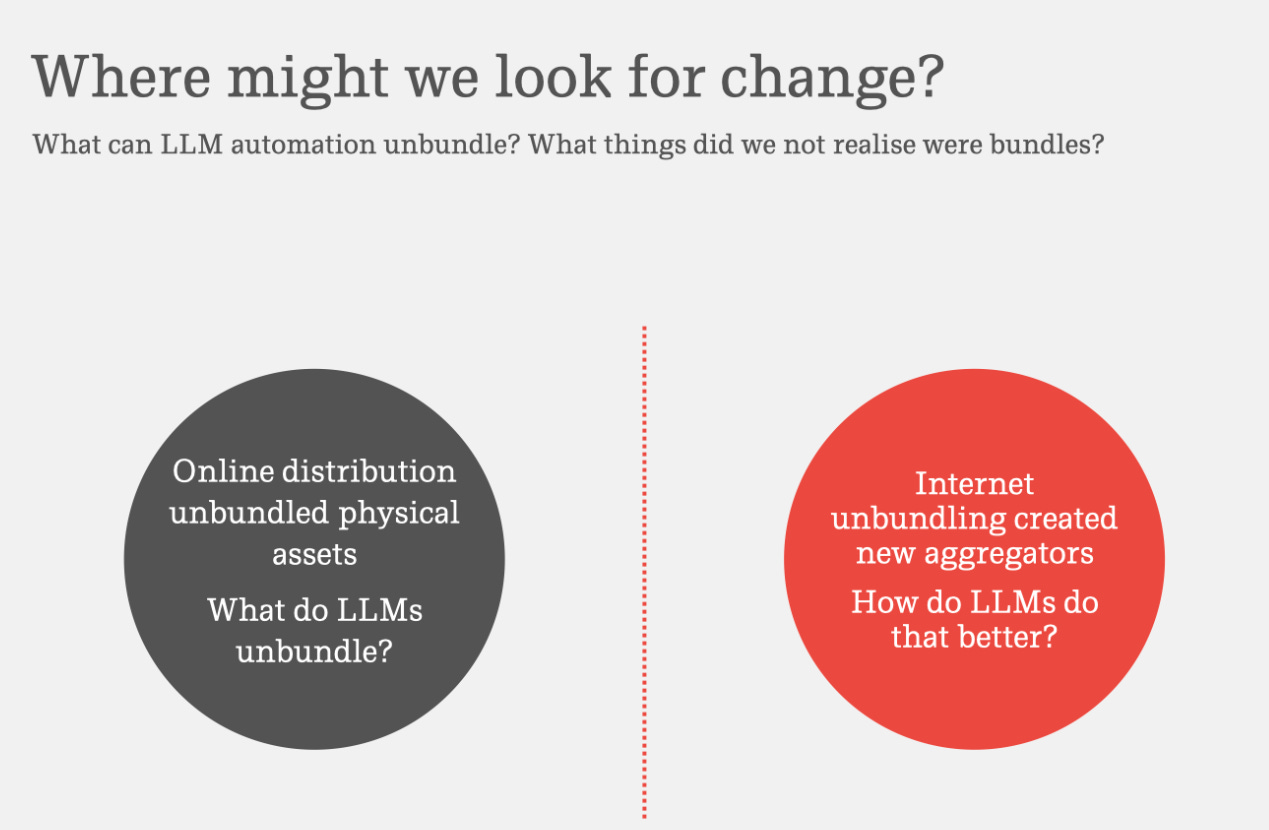
This requires asking more profound questions: What existing product and service bundles will large language models (LLMs) unbundle? And what new forms of aggregation and value creation will they enable?
The “Infinite Interns” Paradox
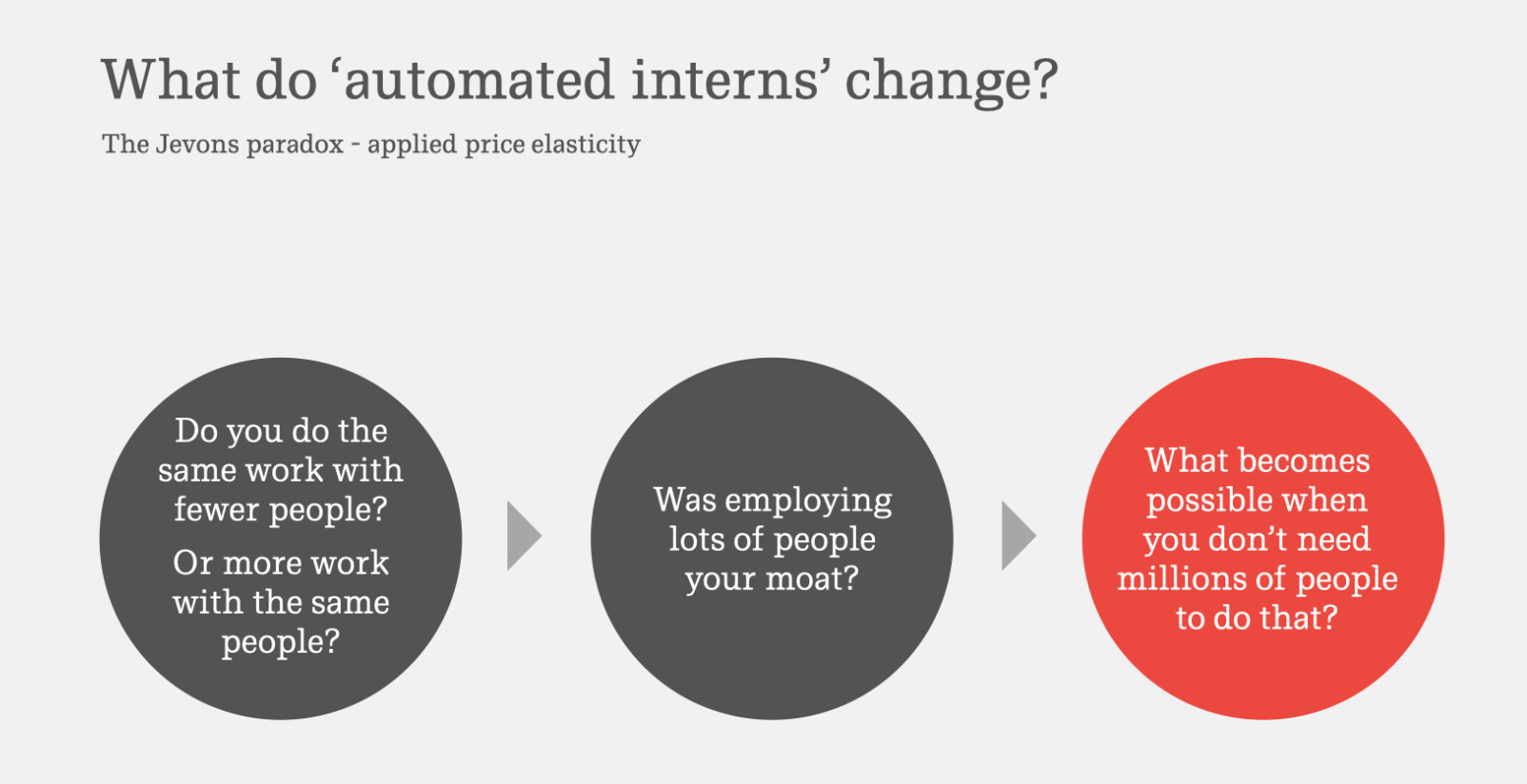
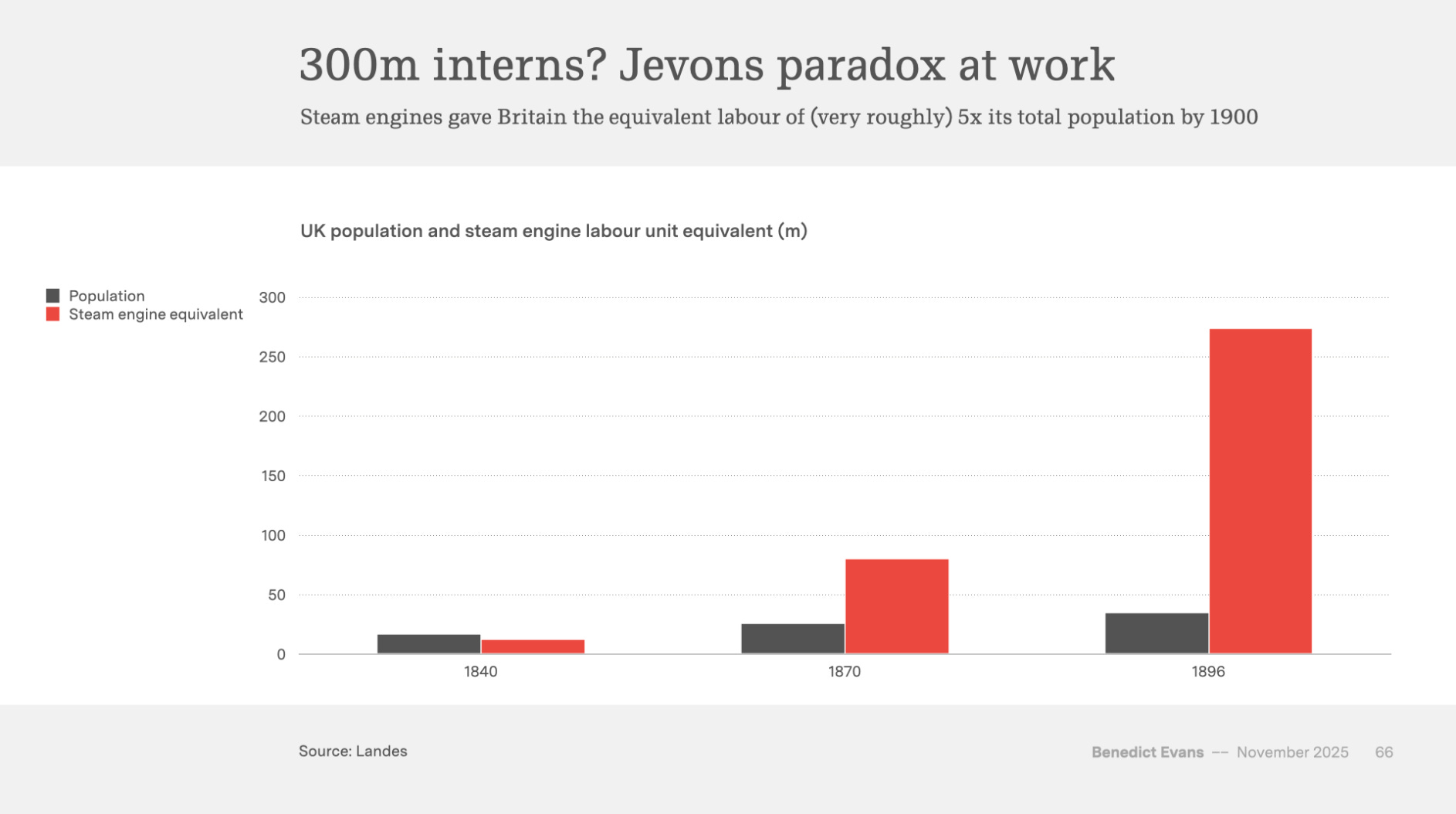
Generative AI is often described as providing businesses with “infinite interns”—a virtually limitless source of cognitive labor. This concept stems from the famous Jevons Paradox, which holds that when something becomes more efficient, its usage increases. This presents a critical strategic choice: Do you do the same work with fewer people? Or more work with the same people? The answer has disruptive implications. For industries where employing large numbers of people was a competitive moat, that advantage may soon evaporate.
This shift mirrors the impact of the steam engine in 19th-century Britain, which gave the nation the labor equivalent of “250 million extra working pairs of hands” and powered the Industrial Revolution. Generative AI promises a similar multiplier for knowledge work, forcing a complete rethinking of business scale and defensibility.
The Future of Aggregation and “Agentic Commerce”
In this future, a user might simply ask an AI what to buy, bypassing traditional search and discovery platforms like Google and Amazon entirely, creating a radically different, more direct path to purchase.
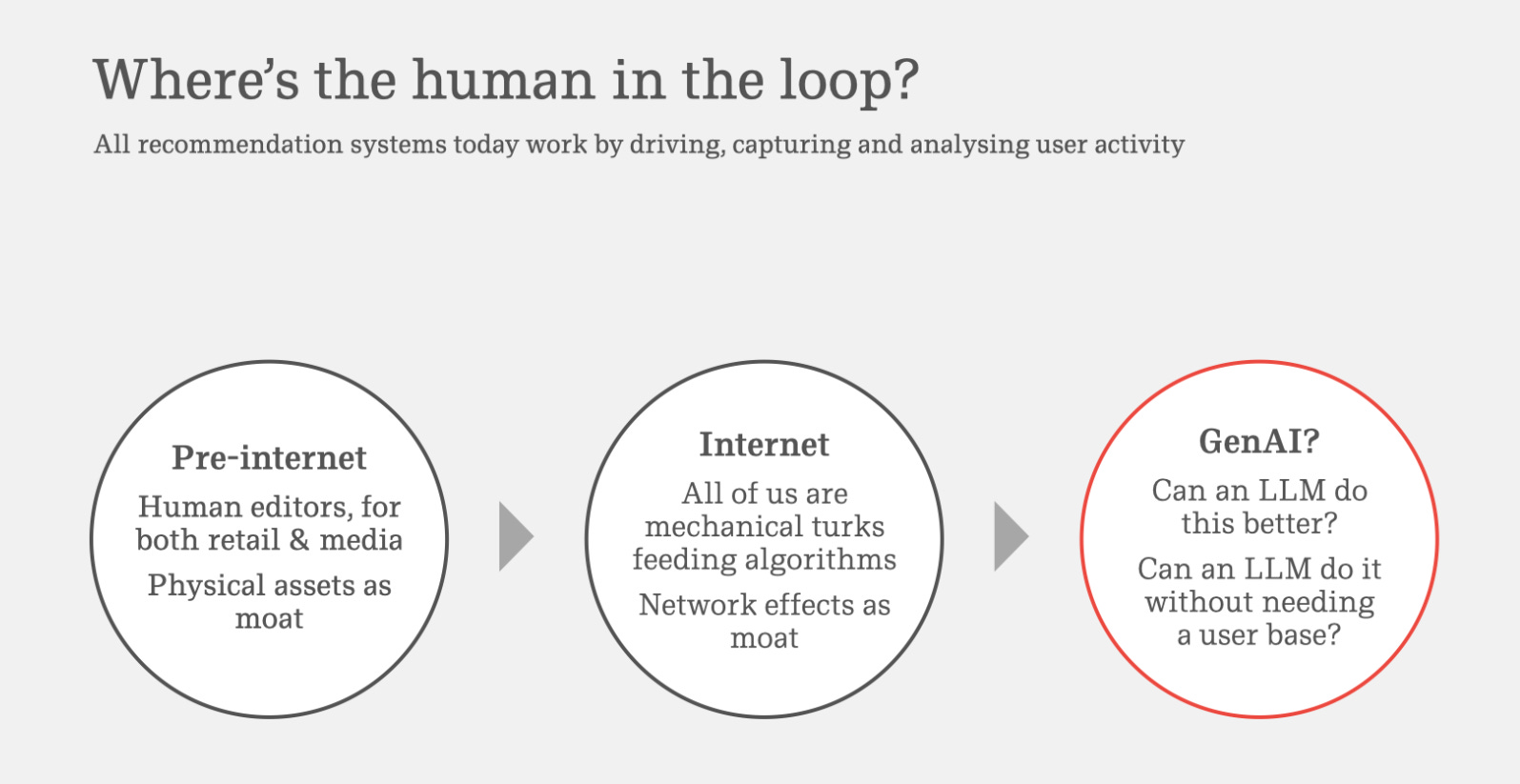
The internet era was defined by new models of aggregation, where algorithms fed by user activity (e.g., clicks, views, purchases) determine what we see. Generative AI has the potential to create a new paradigm. An LLM can understand products and user needs at a deeper level of abstraction, potentially without needing a massive user base for training.
“Our new AI recommendation model drove 5% more ad conversion on Instagram and 3% on Facebook” - Meta, Q2 2025
“Advertisers that activate AI Max in Search campaigns typically see 14% more conversions” - Google, Q2 2025
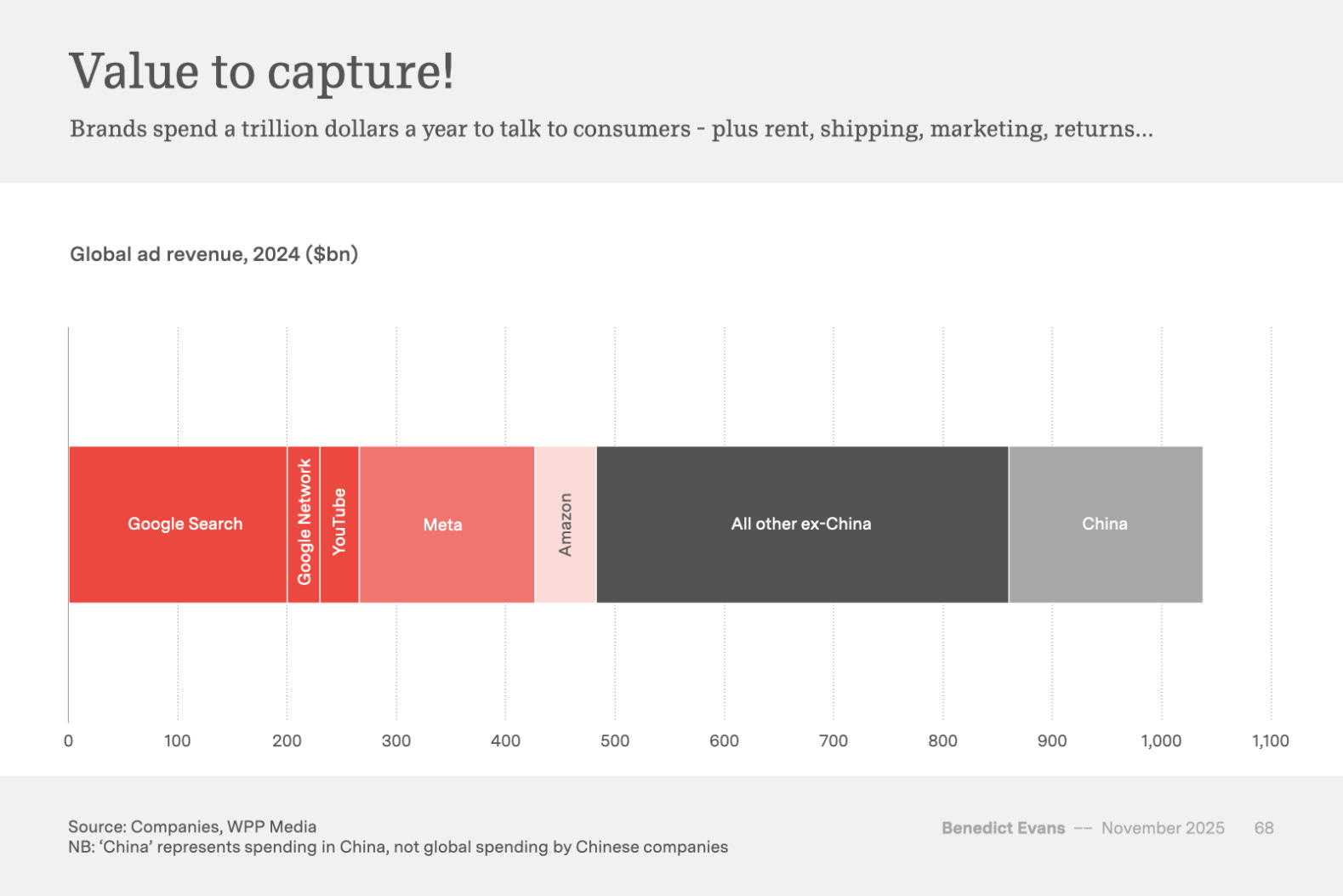
This capability poses a direct threat to the $1 trillion global advertising industry.
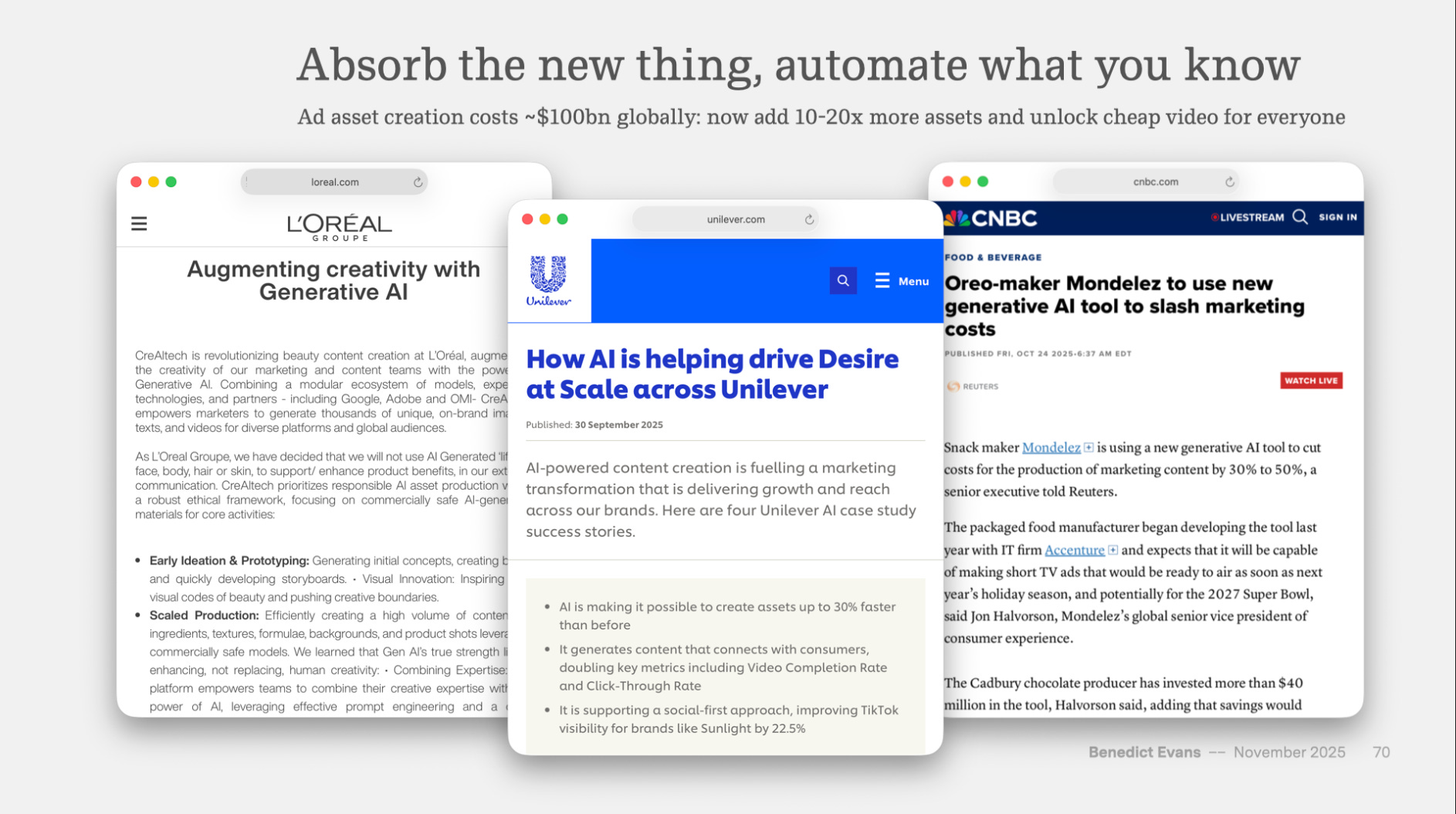
While the current “absorb” phase focuses on using AI to optimize the creation of ad assets, the truly disruptive phase points toward “agentic commerce.” In this future, a user might simply ask an AI what to buy, bypassing traditional search and discovery platforms like Google and Amazon entirely, creating a radically different, more direct path to purchase.
Redefining the Customer Relationship in the Age of AI
AI has the potential to unbundle the very concept of a purchase by better understanding a consumer’s underlying intent.
At its most fundamental level, AI has the potential to unbundle the very concept of a purchase by better understanding a consumer’s underlying intent.
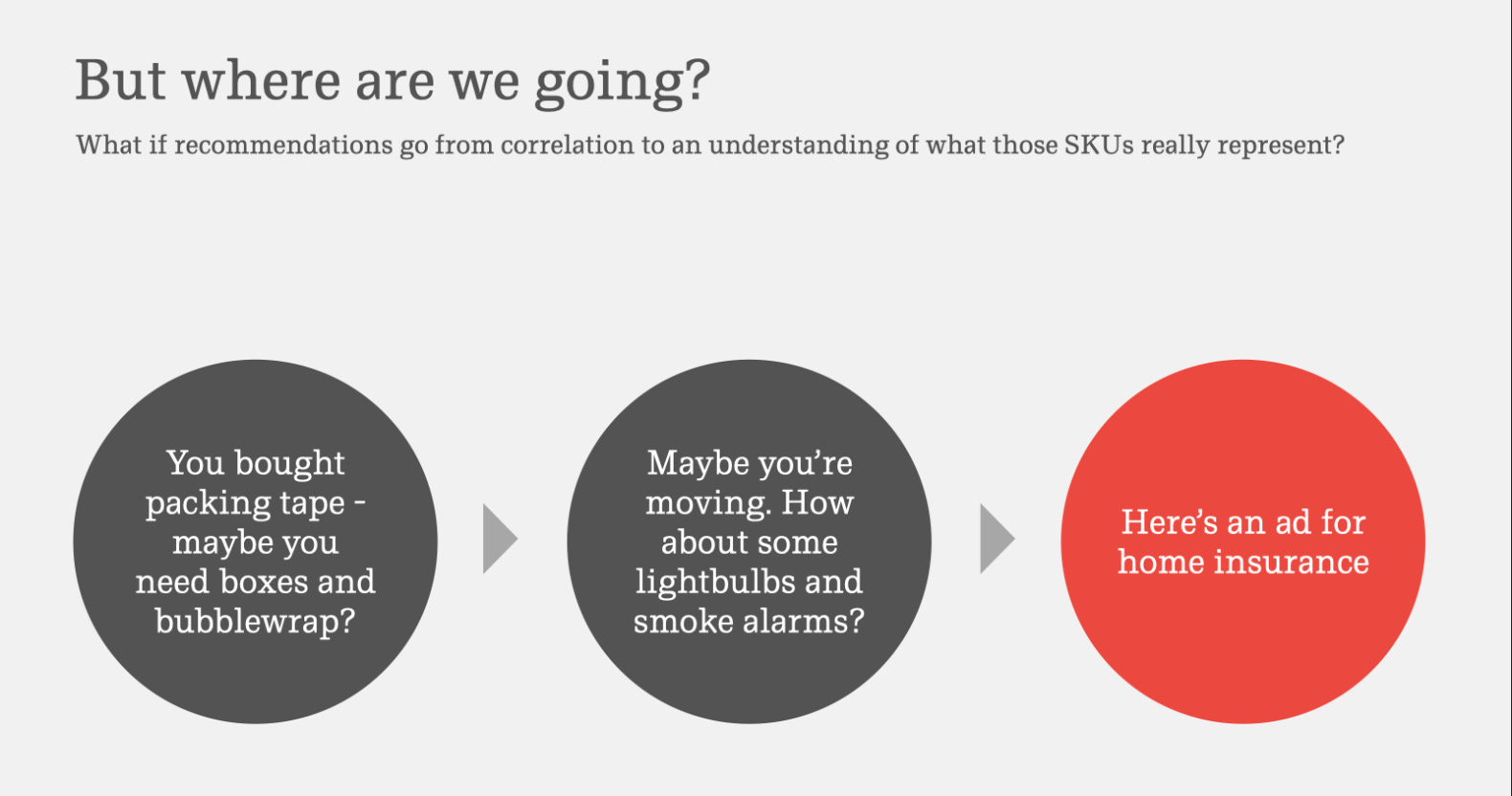
It can serve two distinct types of needs in novel ways:
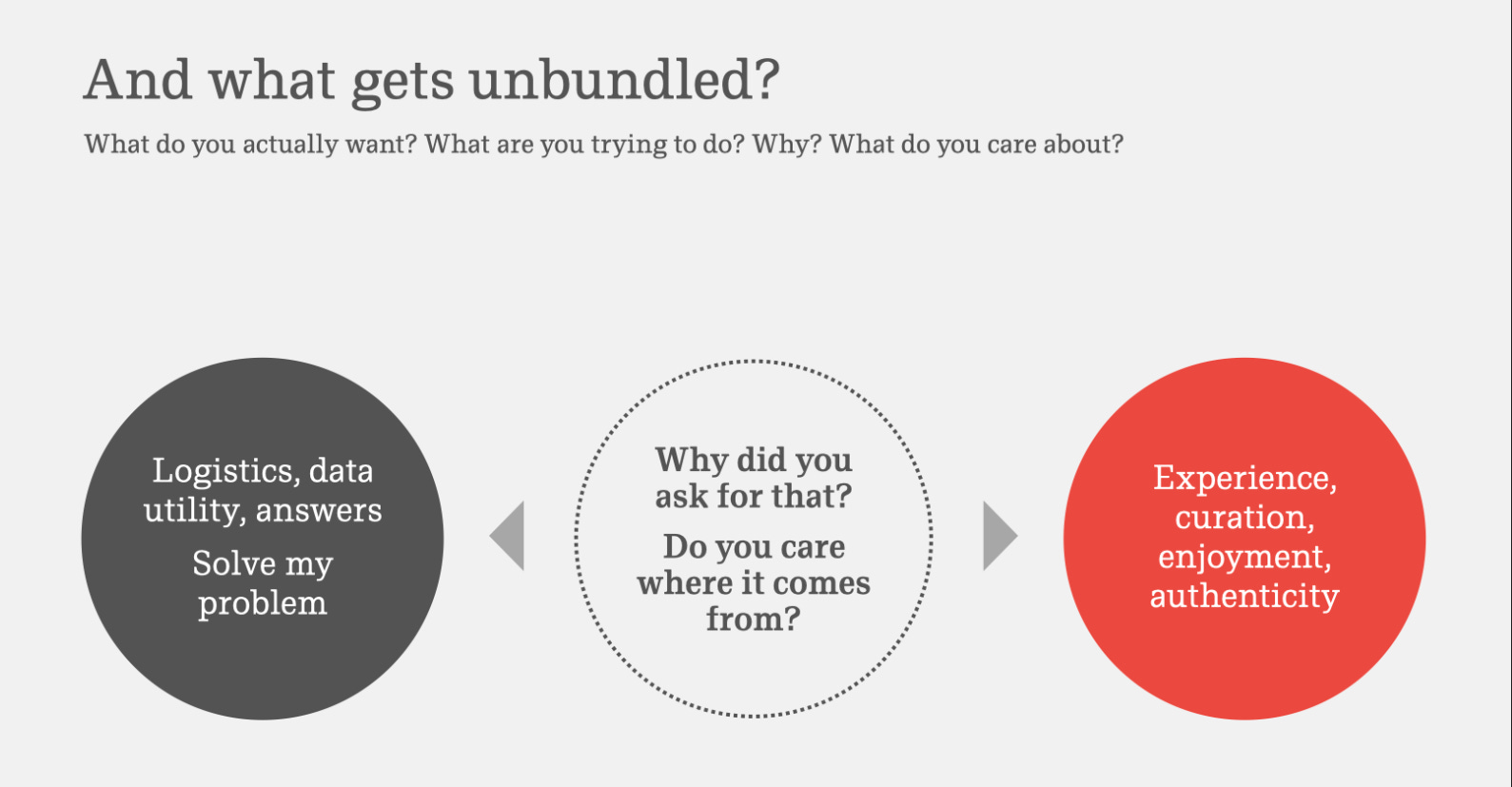
Utility: For tasks focused on pure function and logistics, AI can solve the problem with maximum efficiency.
Old: “half of AI will be turning three bullet points into email, and the other hald will be turning emails into three bullet points”
New: half of AI will be turning three bullet points into 300 ads, and the other half…
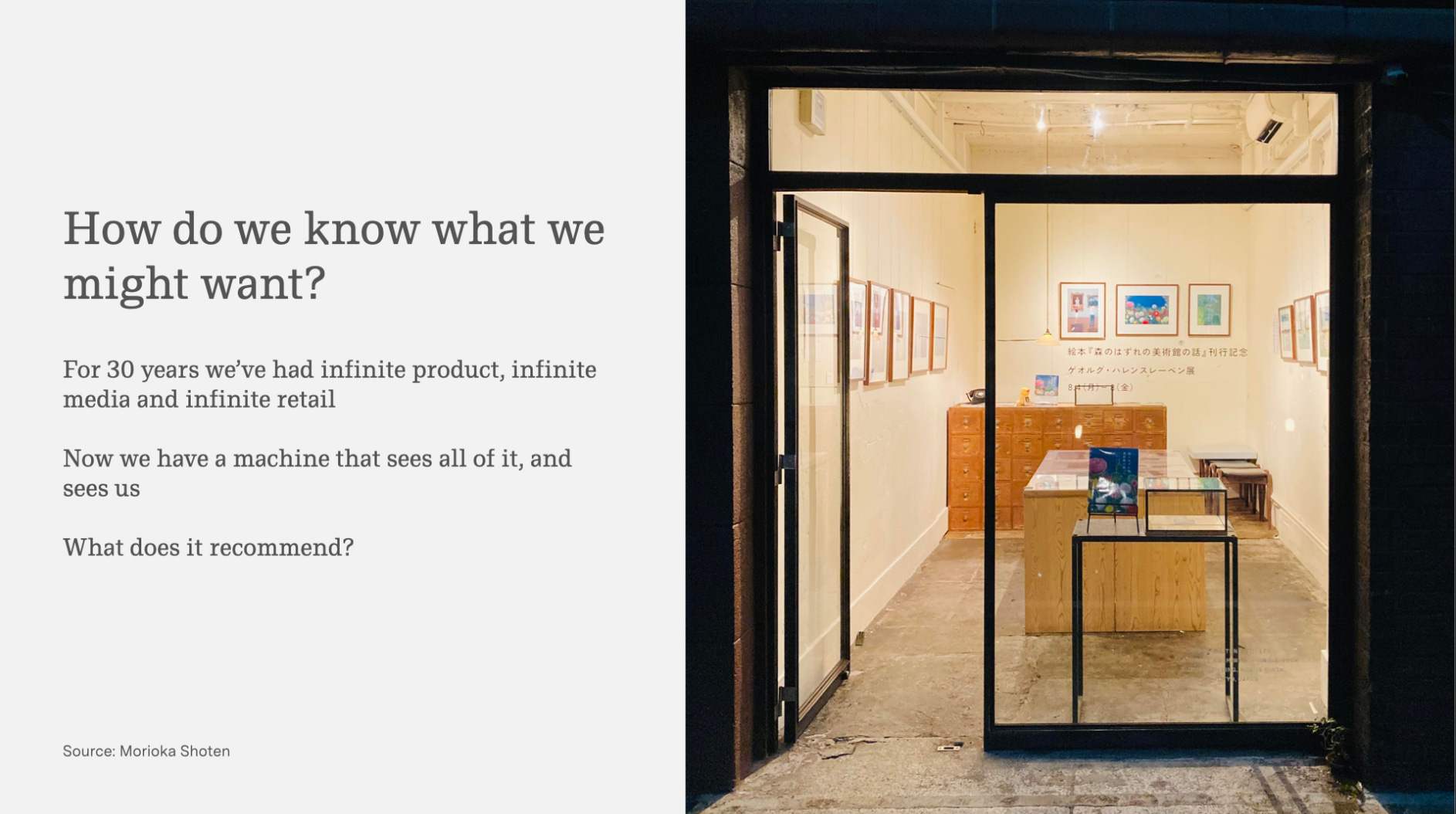
Experience: For needs centered on curation, enjoyment, and authenticity, AI can offer highly personalized recommendations that cut through the noise of infinite choice. The example of a Tokyo shop that sells only one curated book illustrates a powerful counter-trend to the internet’s “infinite shelf.” AI could deliver this level of hyper-curation at a global scale, fundamentally changing how consumers discover products and how businesses build relationships with them.
Next lesson in The Economics of AI course:
Lesson 6: The Enduring Cycle of Automation

Throughout history, people have used tools and technologies to automate as much as possible. Those who automated more and faster benefited from cost savings and increased speed of production. The new era of AI will allow us to automate vast areas of human endeavor, driving costs down, making everything more affordable, lifting millions out of poverty, and enabling more people than ever to create, earn, and pursue their dreams.
Let us know what you think
How do you use AI for work or personal reasons? Is it successful? What about your company?
Did we miss any other ways we should be thinking about AI?
What other businesses and industries do you think will be disrupted? How and why?
Share our community with others
We are building a community of innovators and proactive problem-solvers. Our aim is to establish a business and innovation incubator that supports individuals eager to innovate—helping them get started, connect with like-minded people, form teams, secure funding, and transform their ideas into tangible solutions regardless of industry, problem, or experience.
Disclaimer
We reserve the right to change our minds about anything published in The Golden Age newsletter as new information comes to light.
Nothing produced under The Golden Age brand should be construed as investment advice. The contents of this publication are for educational and entertainment purposes only, and do not purport to be, and are not intended to be, financial, legal, accounting, tax, or investment advice. Investments or strategies that are discussed may not be suitable for you, do not take into account your particular investment objectives, financial situation, or needs, and are not intended to provide investment advice or recommendations appropriate for you. Before making any investment or trade, consider whether it is suitable for you and consider seeking advice from your own financial or investment adviser. This publication’s authors are not licensed investment professionals. Views expressed on The Golden Age are exclusively those of editors and not of any affiliated firm or organization. Do your own research before investing.