

Lesson 3 breaks down the commoditization of AI models, the lack of competitive advantages between AI companies, low user engagement, and the strategies companies are using to develop long-term, durable advantages and moats.
Find all the lessons in the Economics of AI here and the previous lesson below.
Lesson 2: From Chips to Power Grids. The Hidden Bottlenecks Behind the AI Gold Rush

Lesson 2 of The Economics of AI covers the capital investments companies are making to build out AI infrastructure, how they compare with other mature industries, and the bottlenecks that prevent us from realizing the full potential and benefits of Generative AI innovations.
The Golden Age’s mission is to build a more peaceful and prosperous world by popularizing and applying first-principles thinking to the problems around us. Join our community of first-principles thinkers, builders, and investors.
The Competitive Landscape: Commoditization, Engagement, and Strategy
Despite the massive capital expenditures and rapid engineering progress, the competitive landscape for generative AI remains highly uncertain. Three years into the current wave, no clear, durable moats or dominant long-term business models have emerged. The market is characterized by a race toward technological parity, a significant gap between user awareness and deep engagement, and divergent strategies among the key players.
Model Performance: A Race to Parity
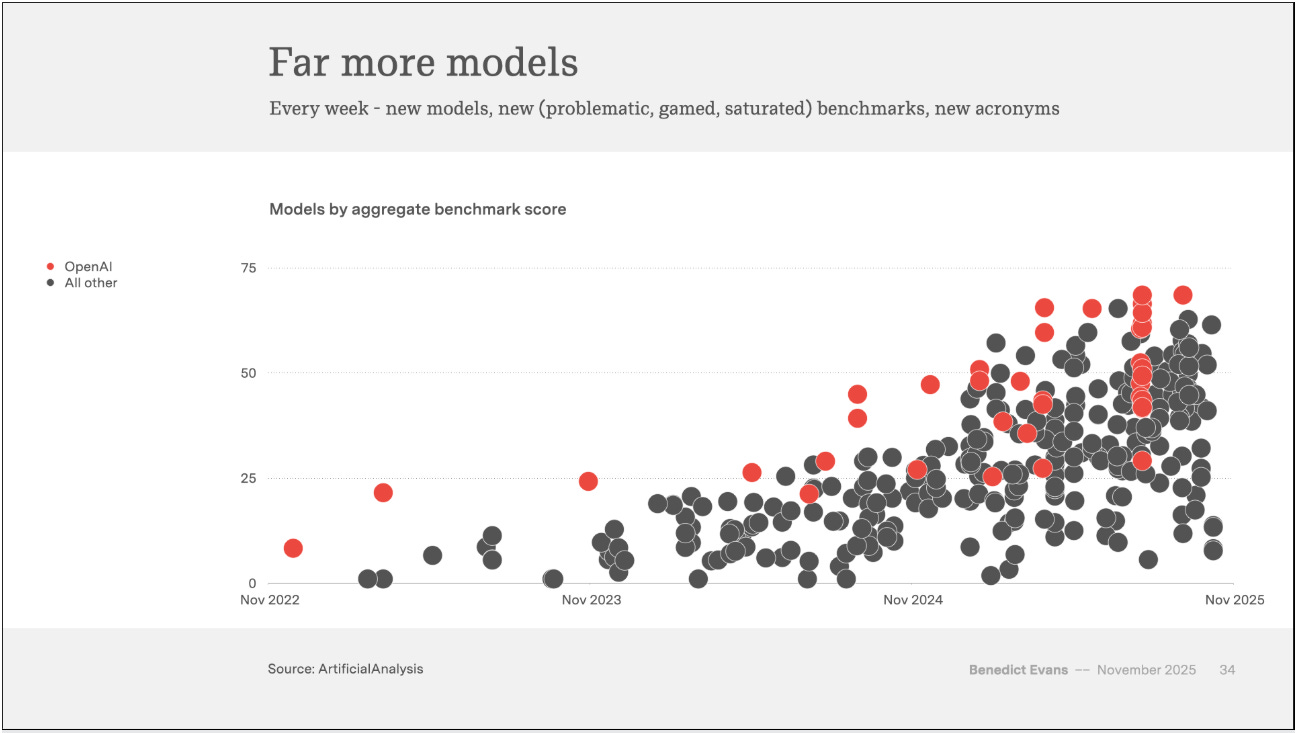
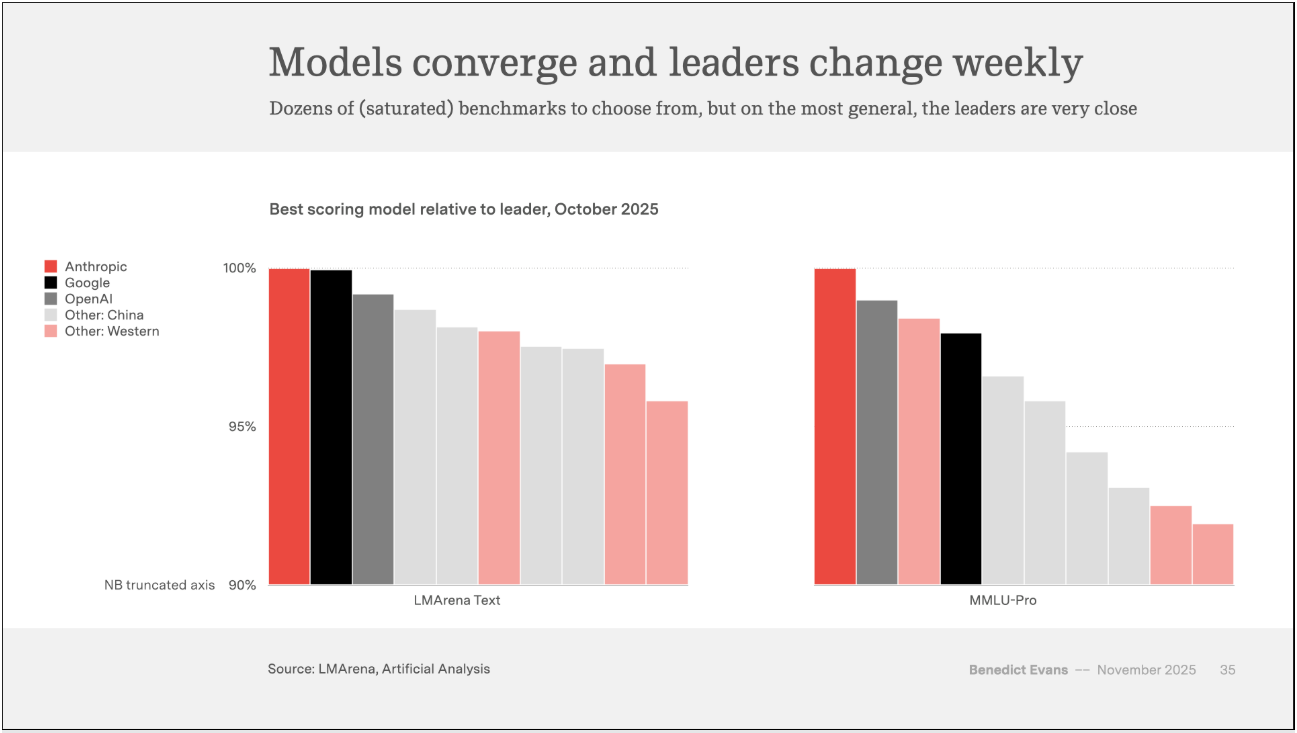
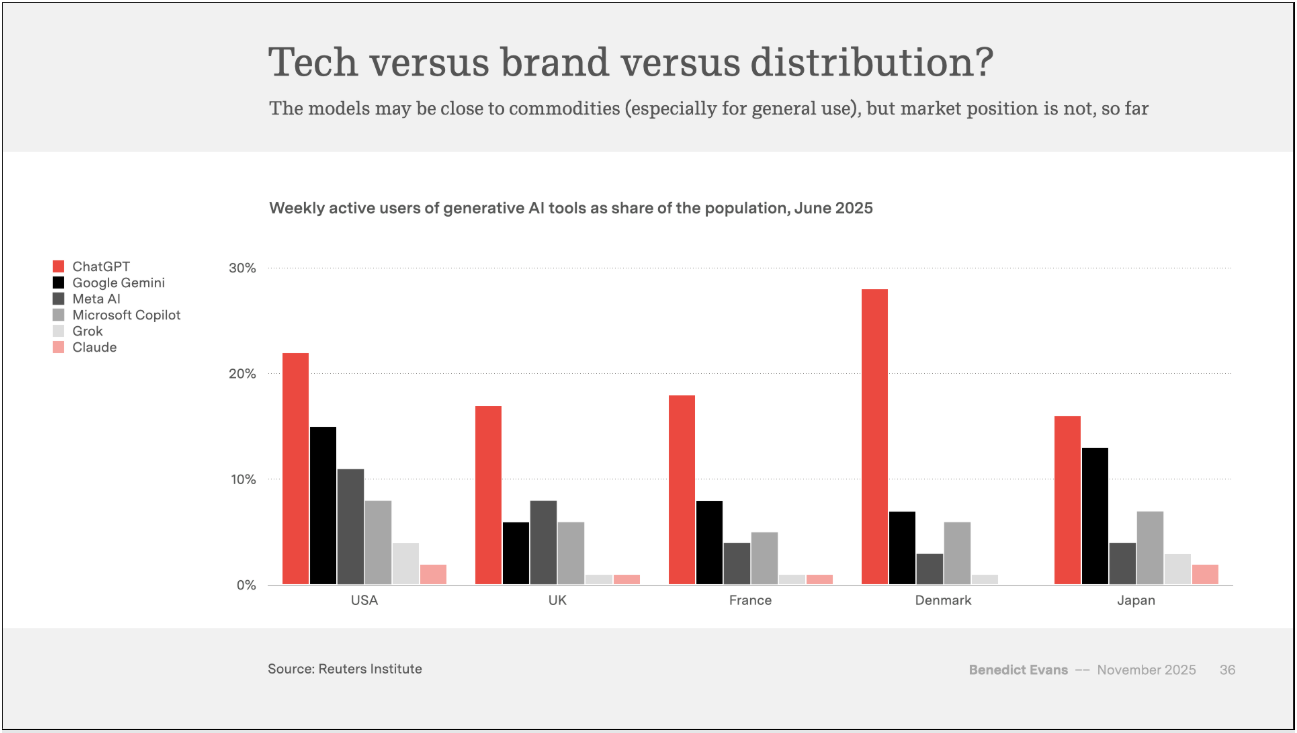
While AI models continue to improve at a remarkable pace, they are also converging in capability. For most general-purpose tasks, the leading models are effectively becoming commodities. Data from common benchmarks shows that the top models are within 5-10% of each other in terms of performance, and the leadership position changes almost weekly as new models are released, indicating that a sustained technical advantage is extremely difficult to maintain.
The Engagement Gap: Usage vs. Awareness
The market remains in an early, exploratory phase, defined by broad but shallow engagement.
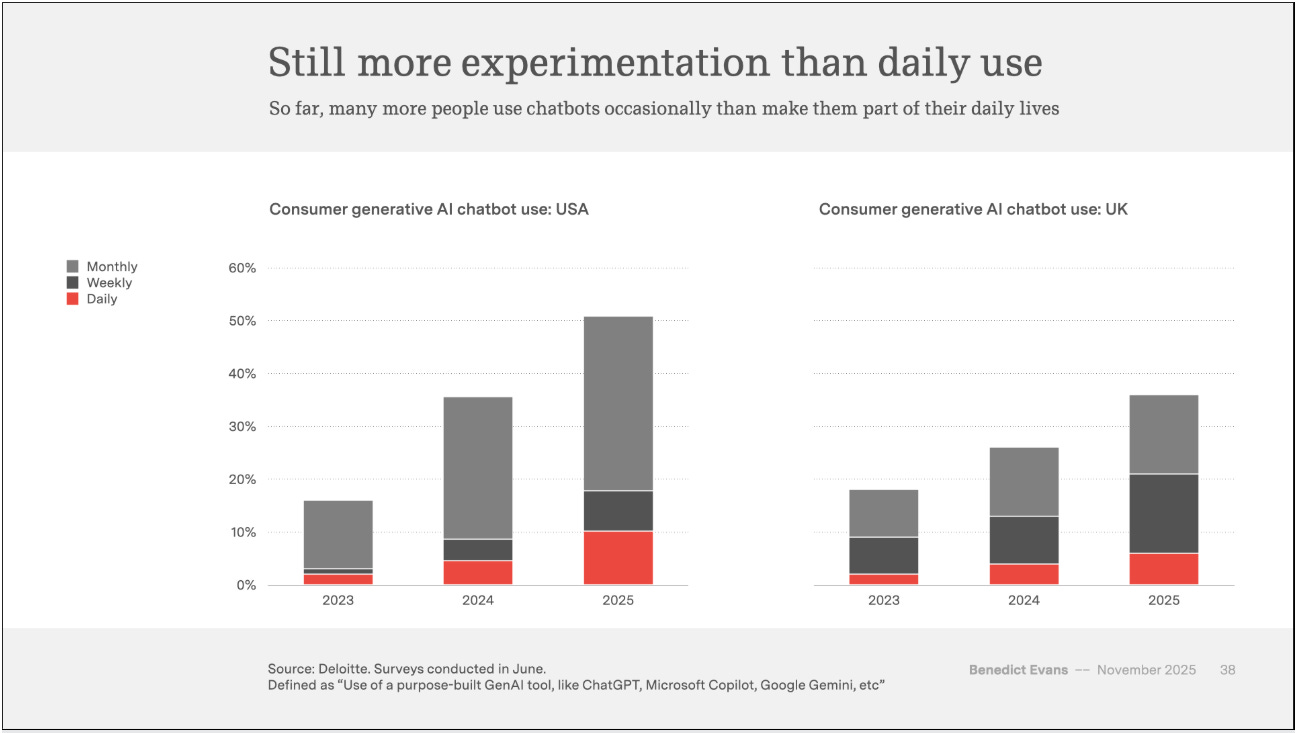
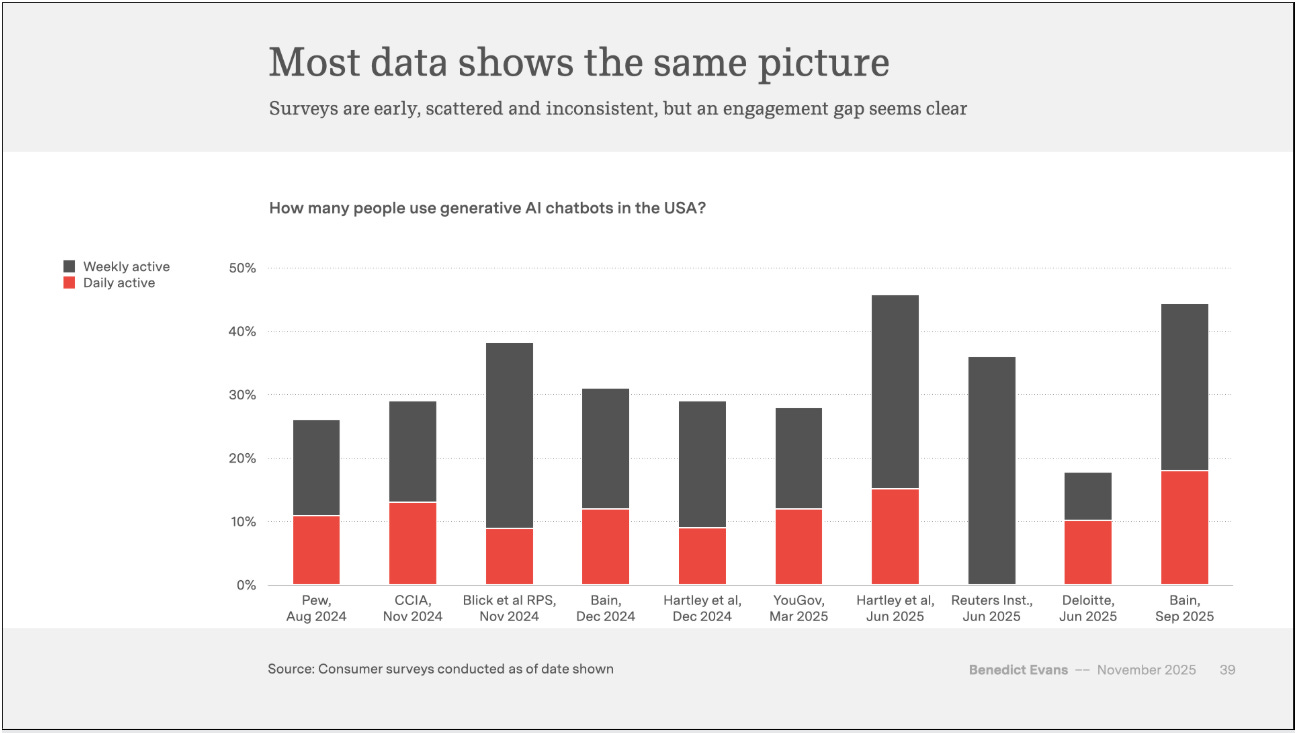
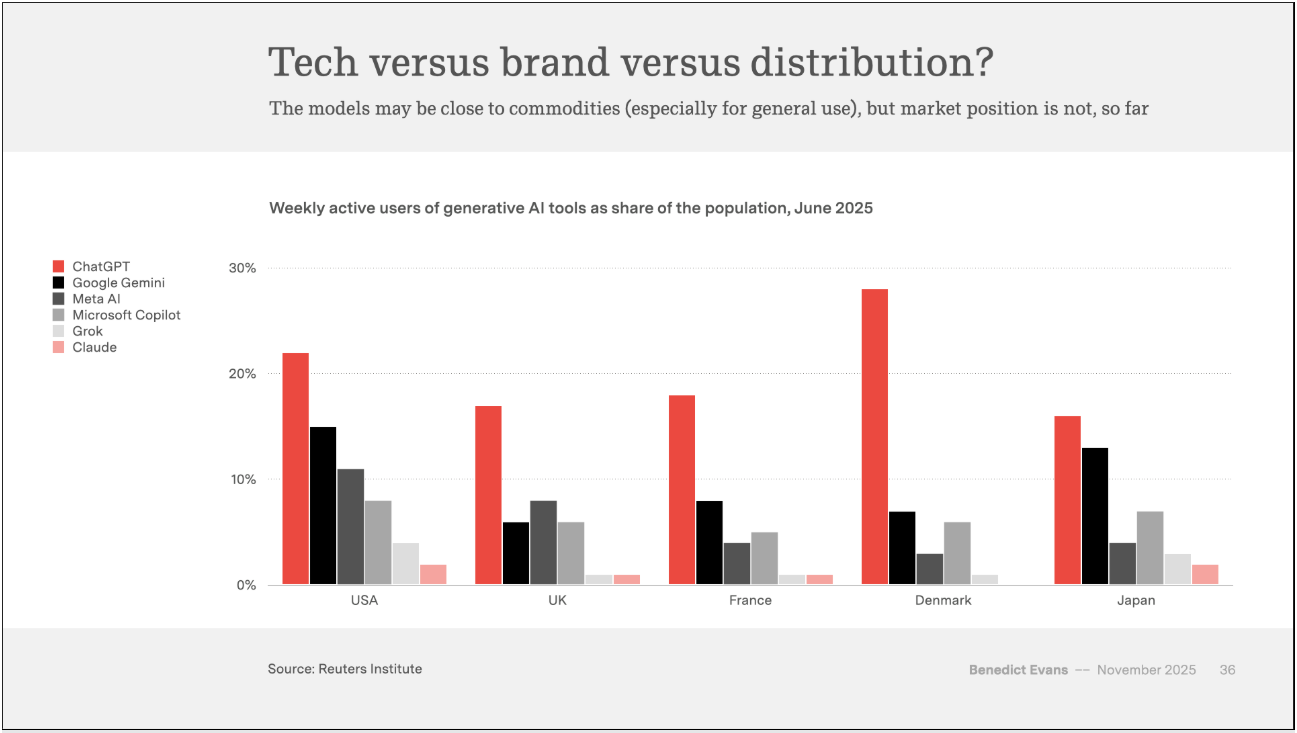
There is a stark contrast between the high public awareness of AI tools and their actual integration into daily life and work. ChatGPT is a prime example. While ChatGPT boasts an impressive 800 million weekly active users, the data shows that “most people who are using it don’t use it very much.”
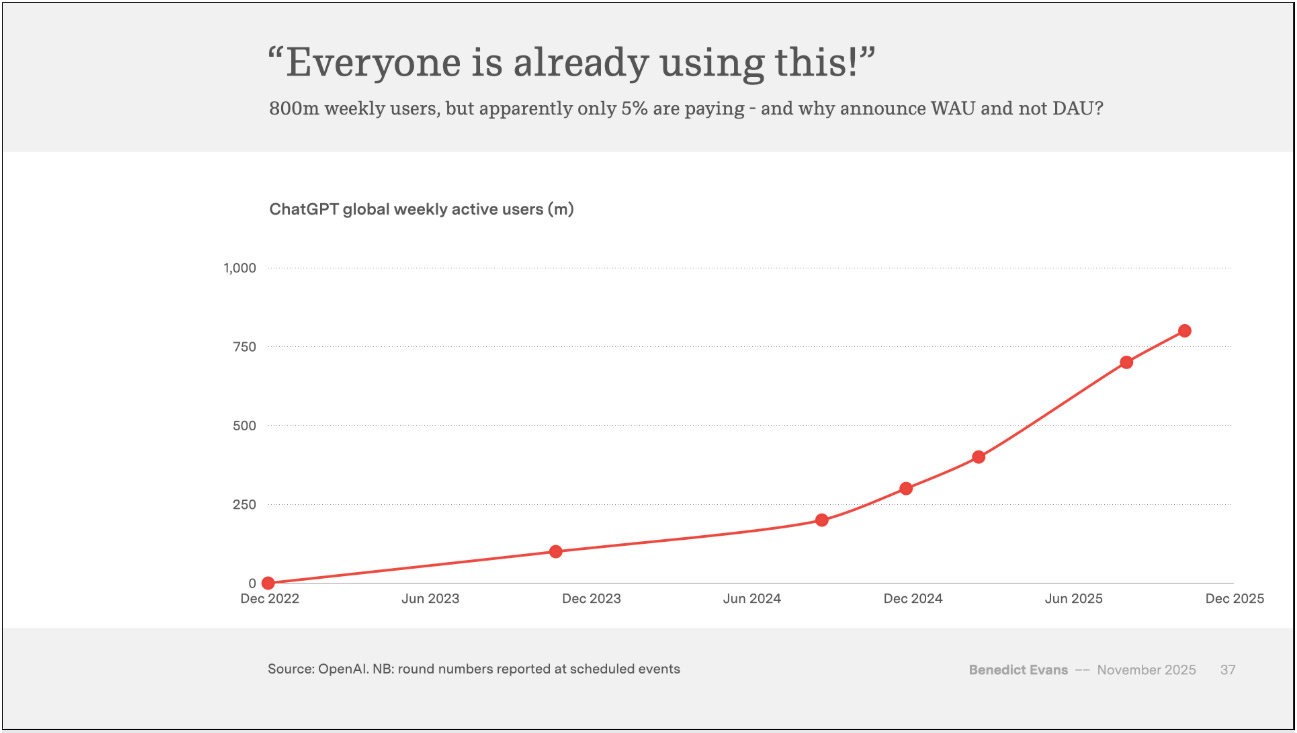
Typical usage frequency is once a week or even once a month, indicating a pattern of occasional experimentation rather than deep, daily reliance for most users. Multiple consumer surveys confirm this “engagement gap,” confirming the market remains in an early, exploratory phase, defined by broad but shallow engagement.
Strategic Postures of Key Players
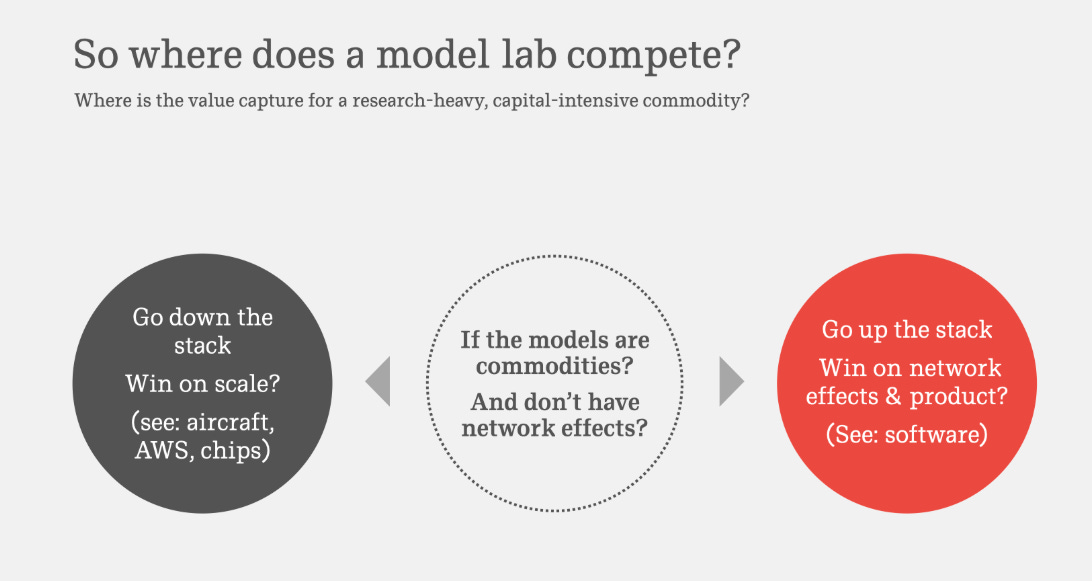
Will long-term value be captured “down the stack” through superior capital, scale, and infrastructure, or “up the stack” through superior product, distribution, and traditional software business models?
In response to this fluid environment, the central players are pursuing distinct and aggressive strategies to secure a long-term advantage.
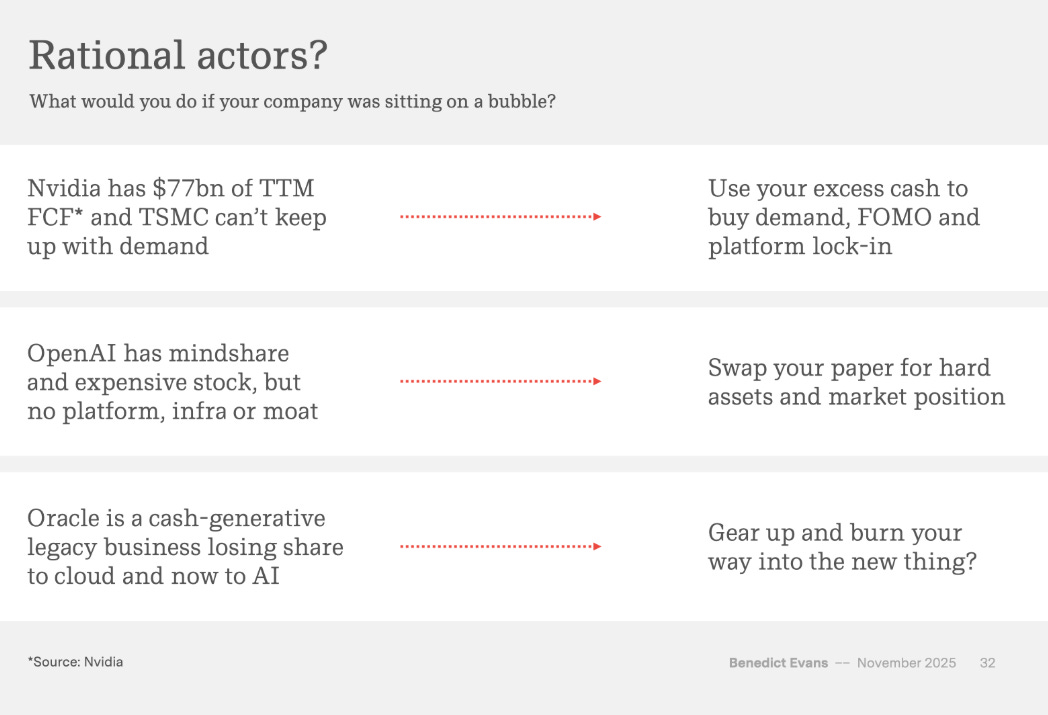
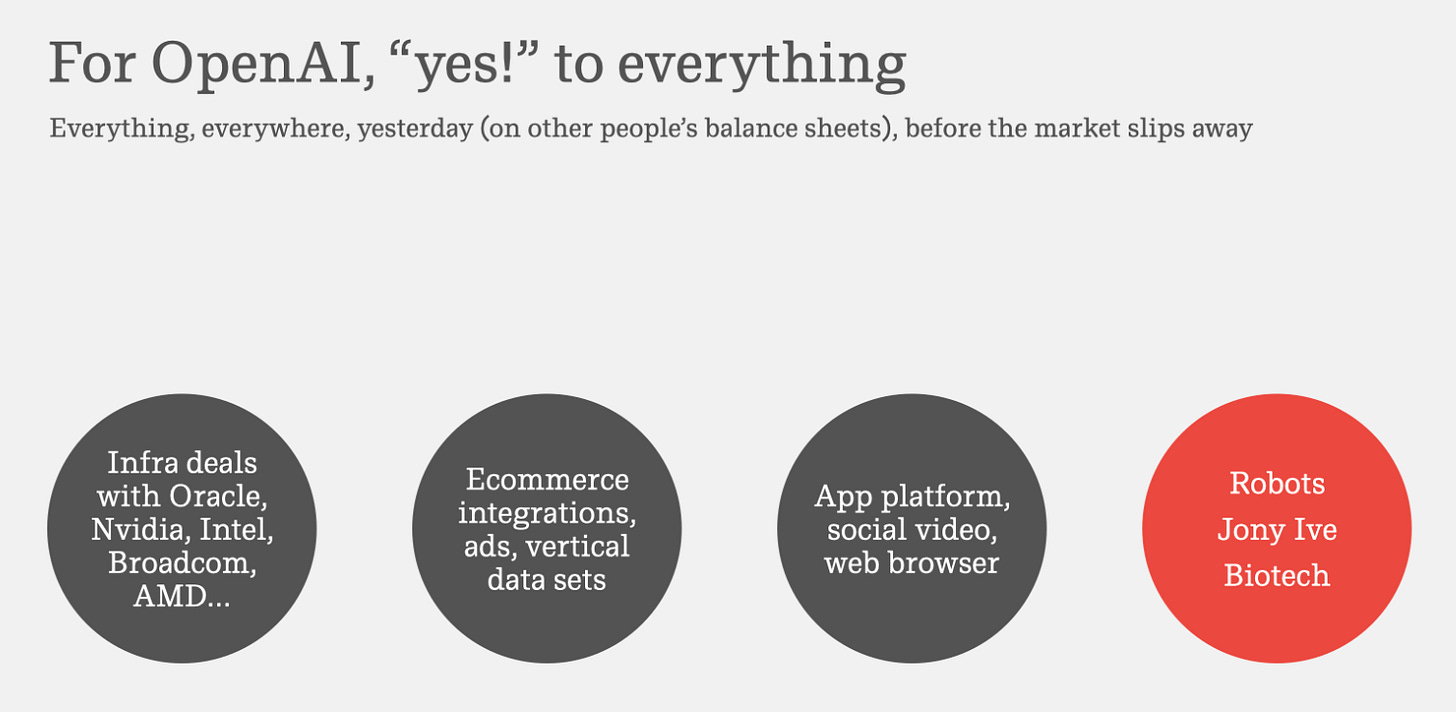
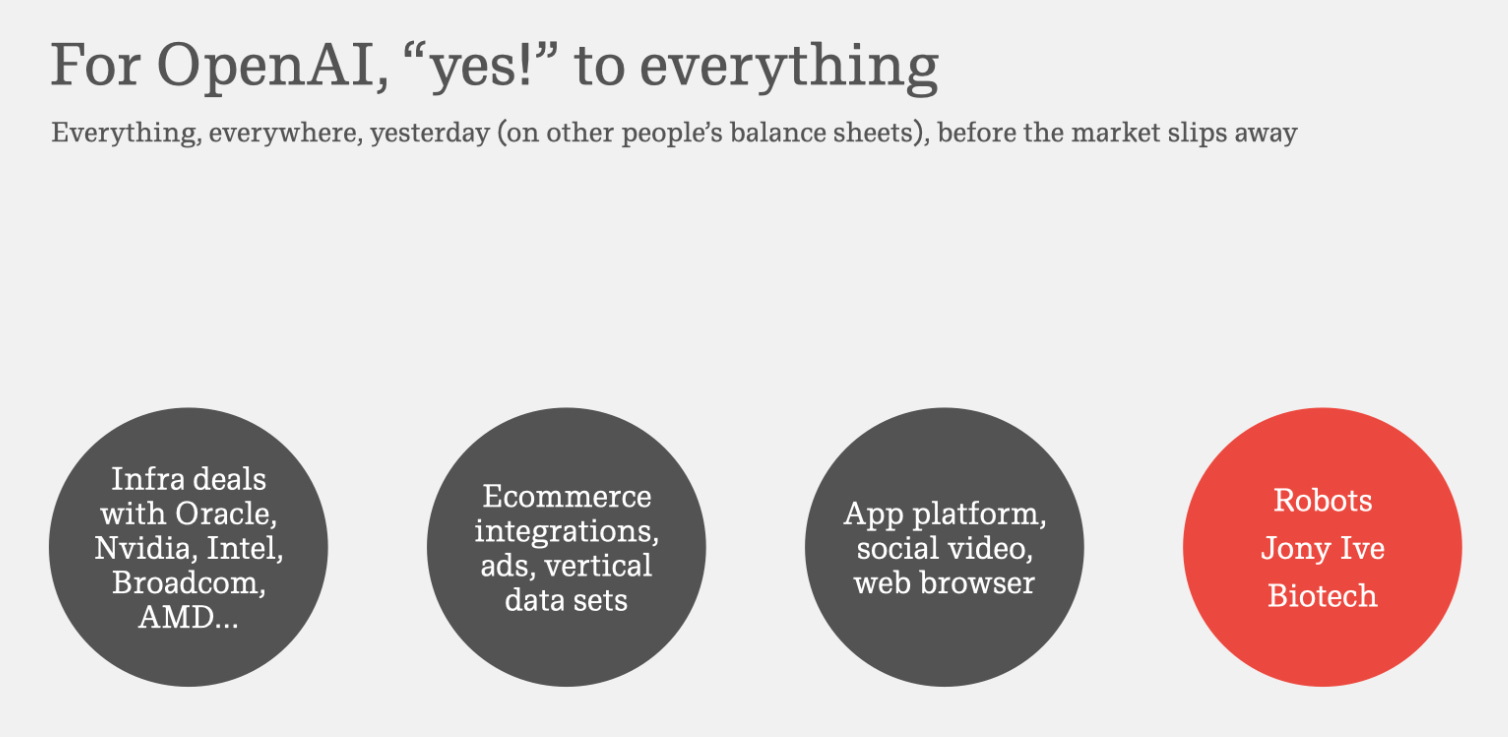
OpenAI: With immense mindshare but a largely commoditized product, OpenAI is in a frantic race to build a defensible business before its commodity product and reliance on partners’ capital becomes an existential vulnerability.
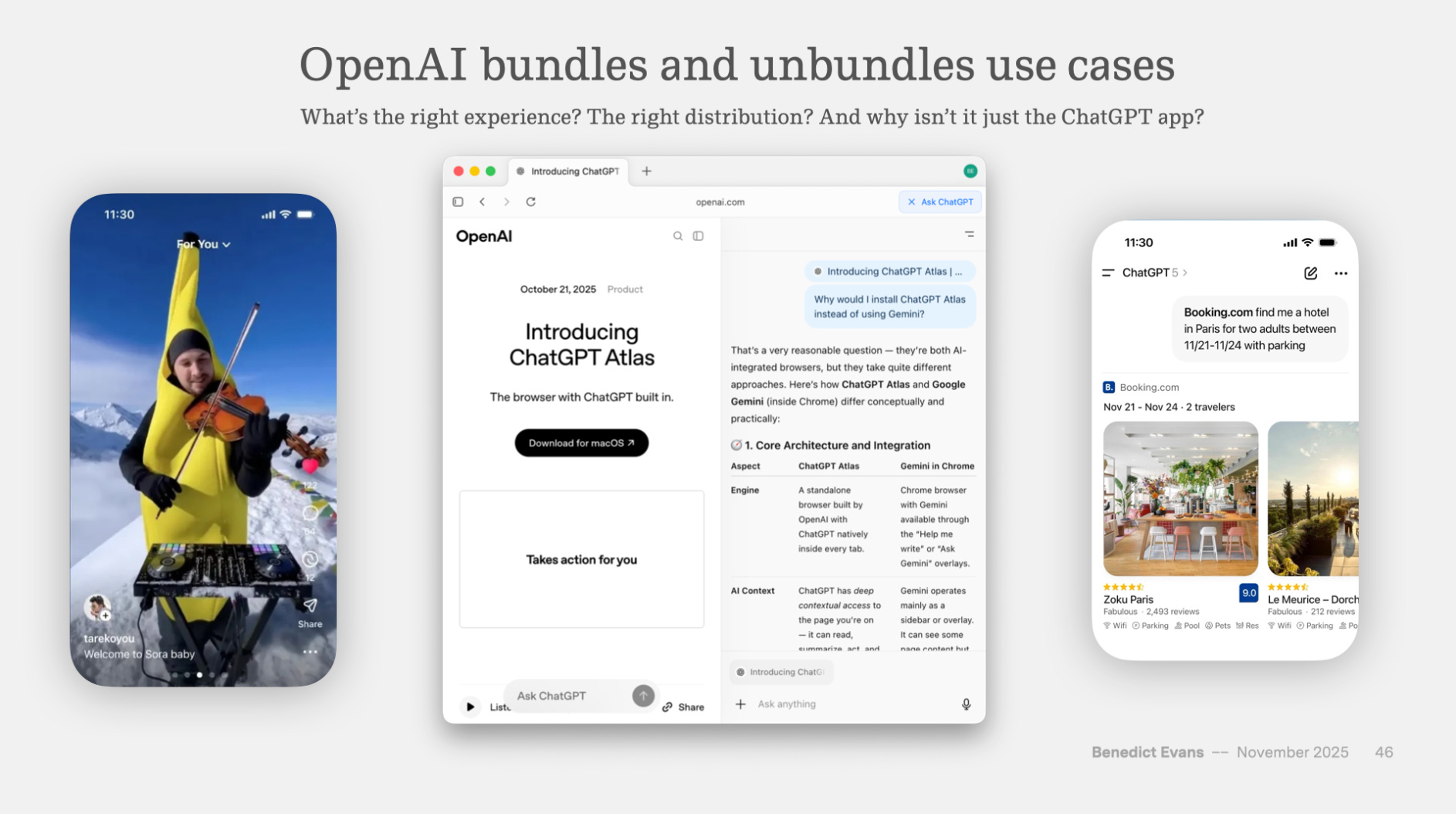
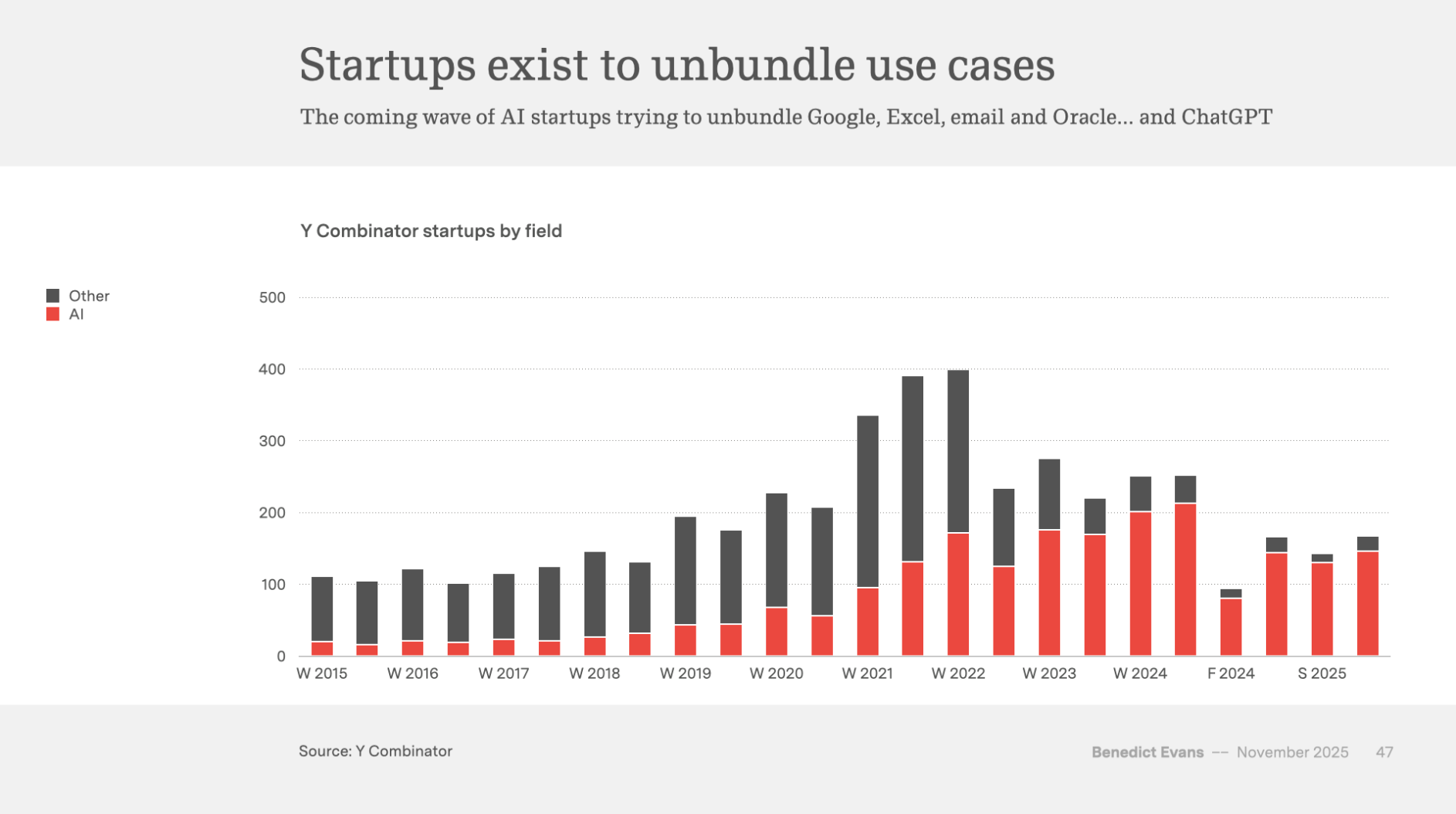
Evans, Benedict. (2025). AI Eats the World [Slide deck]. Its approach is “everything, everywhere, yesterday (on other people’s balance sheets),” aggressively pursuing both bundling and unbundling across the entire technology stack.
Evans, Benedict. (2025). AI Eats the World [Slide deck]. There are two ways to make money. You can bundle, or you can unbundle. -Jim Barksdale
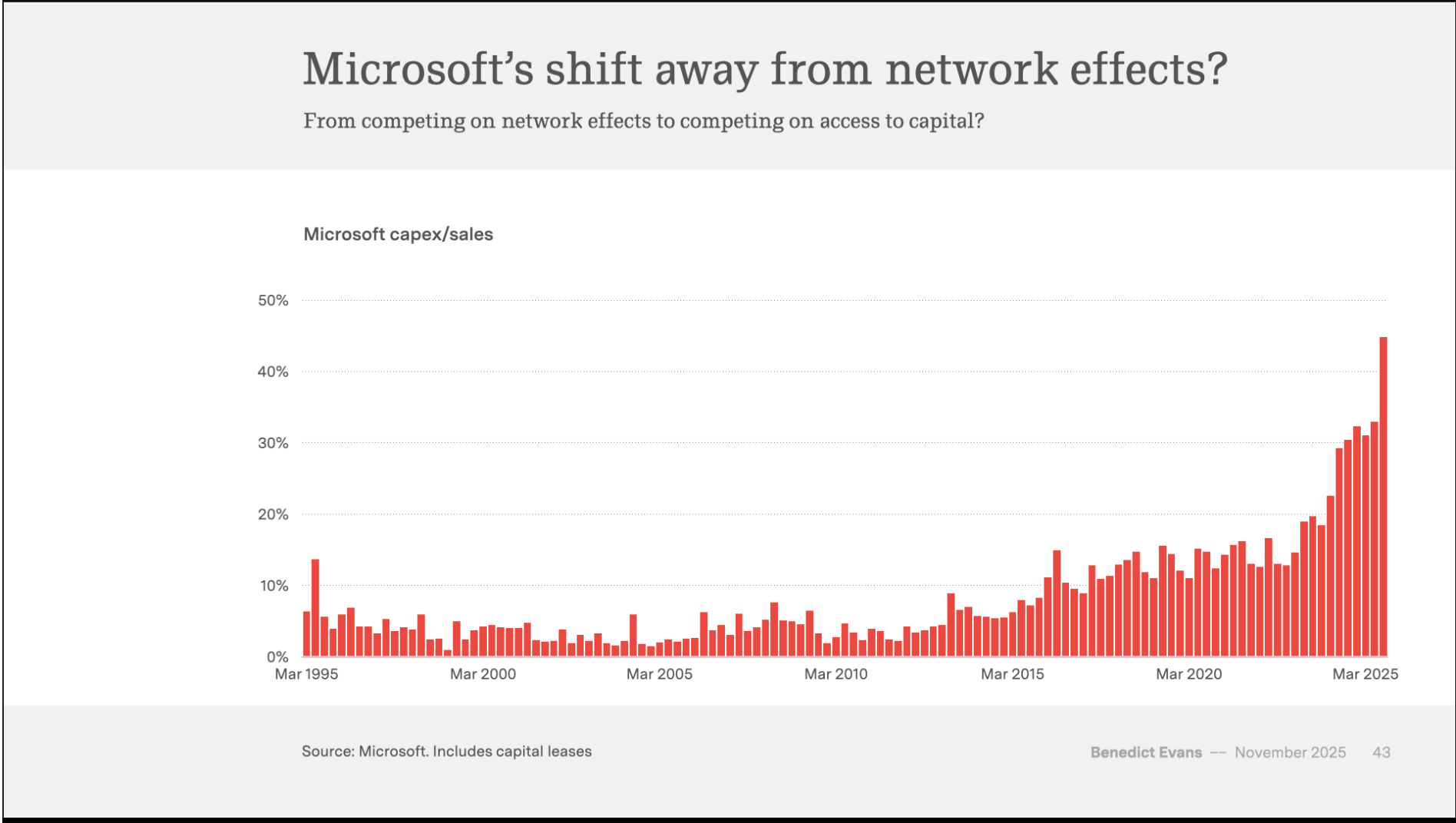
Microsoft: The company is undergoing a fundamental strategic shift, moving from a business model built on the network effects of software to one that competes on access to capital. This is evidenced by its capex soaring to 45% of revenue as it invests billions to build the foundational infrastructure for AI.
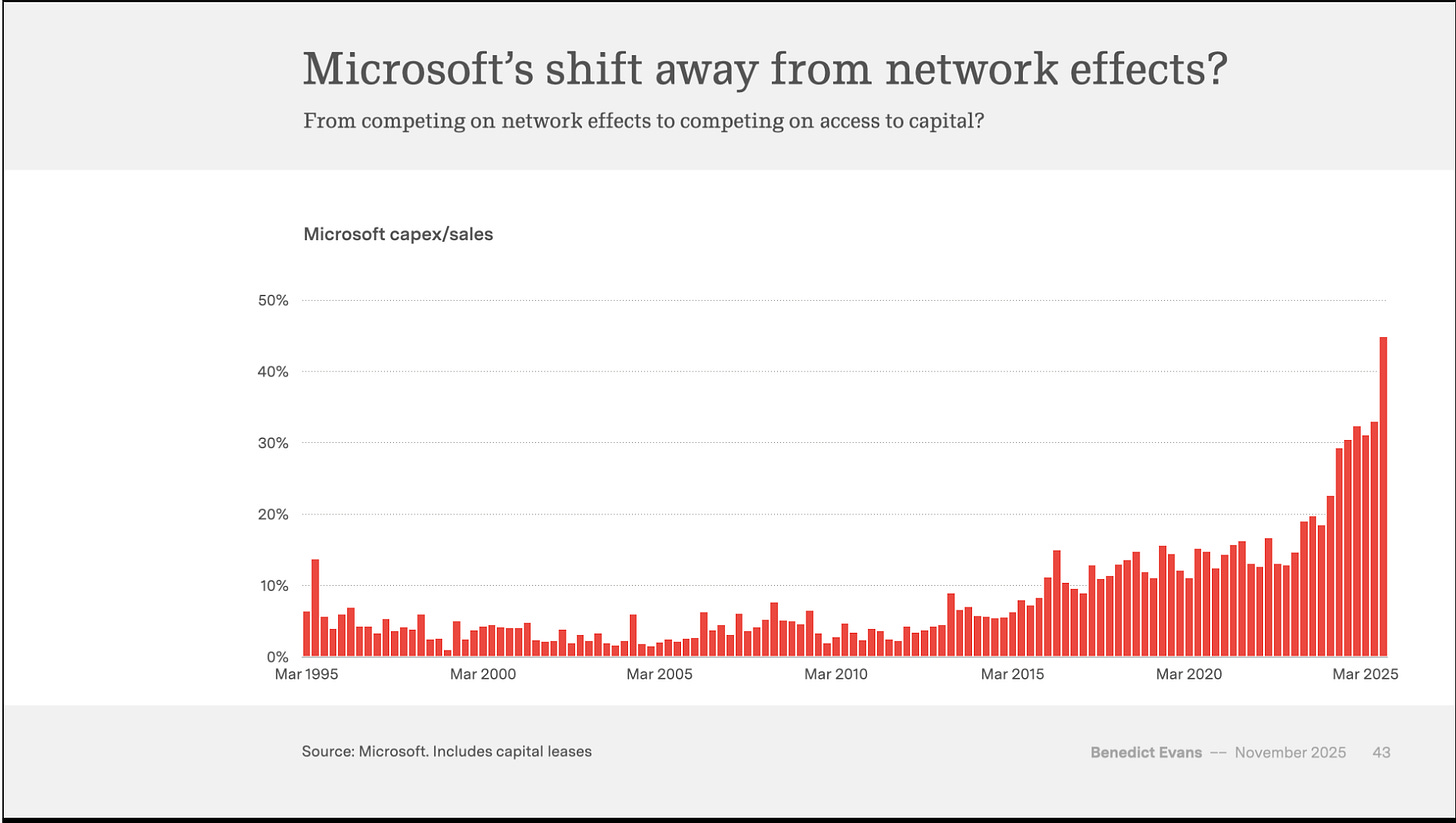
Evans, Benedict. (2025). AI Eats the World [Slide deck]
NVIDIA: Leveraging its dominant market position and $77 billion in trailing twelve months free cash flow, NVIDIA’s strategy is to use its financial might to “buy demand, FOMO, and platform lock-in,” investing heavily across the ecosystem to solidify its central role.
Oracle: As a legacy business, Oracle is employing a classic strategy of using immense capital expenditure to “burn your way into the new thing,” leveraging its balance sheet to build relevance in the new cloud and AI paradigm.
These divergent strategies reflect a fundamental disagreement on where value will accrue: OpenAI is betting on product and platform ubiquity, Microsoft on capital-intensive infrastructure, Nvidia on ecosystem lock-in, and Oracle on brute-force relevance. The market has not yet decided which bet is correct.
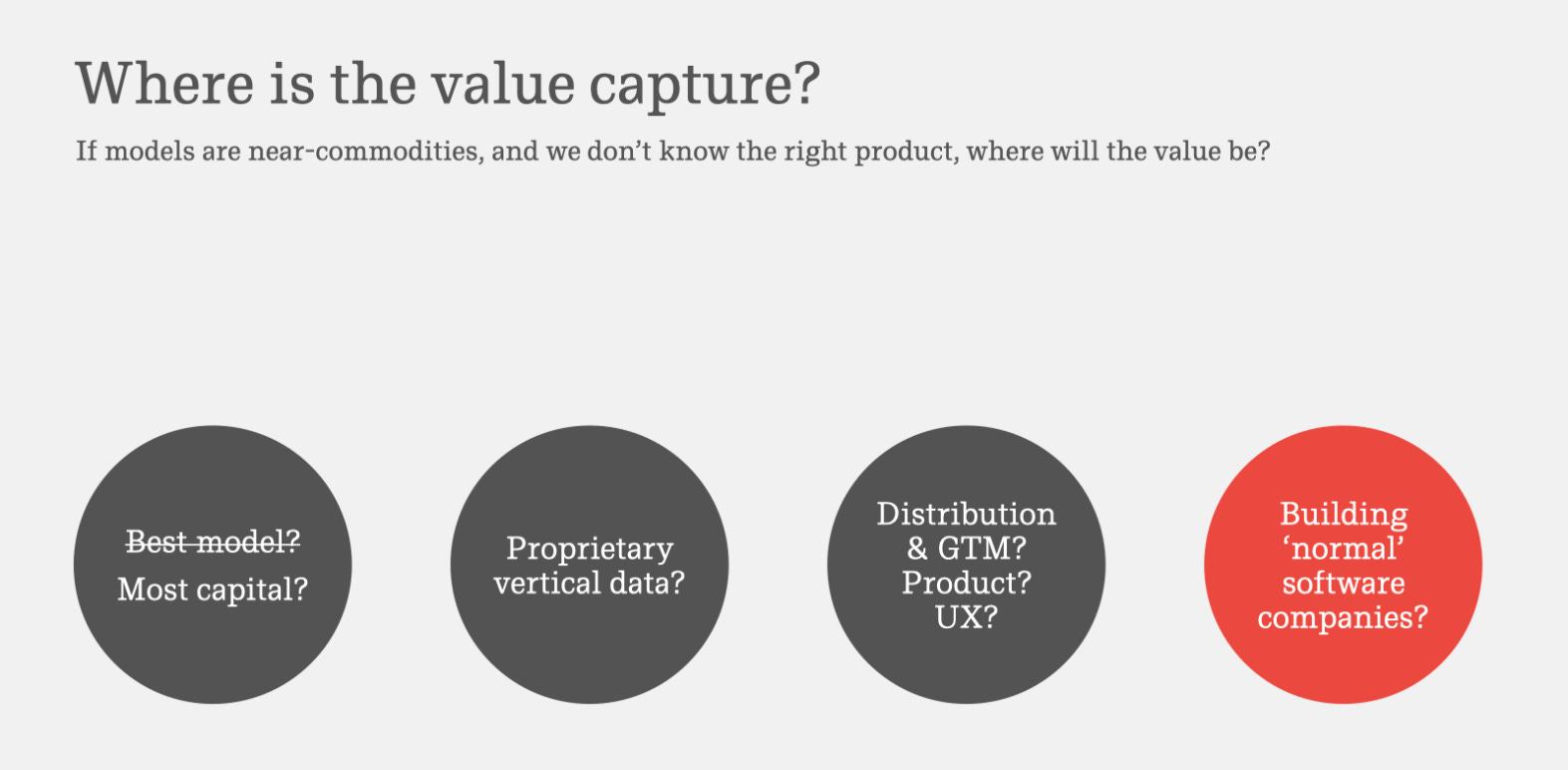
This landscape presents a central strategic dilemma for every company in the space: will long-term value be captured “down the stack” through superior capital, scale, and infrastructure, or “up the stack” through superior product, distribution, and traditional software business models?
Next lesson in The Economics of AI course
Lesson 4: Enterprise's Slow Path from Automation to Disruption

Enterprises are slow to adapt to change and new technologies. They are risk-averse, inefficient, and overcrowded with bureaucracy. In this lesson, we break down the three-part process enterprises take to adopt and deploy new technology,
Let us know what you think
How do you use AI for work or personal reasons? Is it successful? What about your company?
Did we miss any other ways we should be thinking about AI?
What other businesses and industries do you think will be disrupted? How and why?
Share our community with others
We are building a community of innovators and proactive problem-solvers. Our aim is to establish a business and innovation incubator that supports individuals eager to innovate—helping them get started, connect with like-minded people, form teams, secure funding, and transform their ideas into tangible solutions regardless of industry, problem, or experience.
Disclaimer
We reserve the right to change our minds about anything published in The Golden Age newsletter as new information comes to light.
Nothing produced under The Golden Age brand should be construed as investment advice. The contents of this publication are for educational and entertainment purposes only, and do not purport to be, and are not intended to be, financial, legal, accounting, tax, or investment advice. Investments or strategies that are discussed may not be suitable for you, do not take into account your particular investment objectives, financial situation, or needs, and are not intended to provide investment advice or recommendations appropriate for you. Before making any investment or trade, consider whether it is suitable for you and consider seeking advice from your own financial or investment adviser. This publication’s authors are not licensed investment professionals. Views expressed on The Golden Age are exclusively those of editors and not of any affiliated firm or organization. Do your own research before investing.