

Throughout history, people have used tools and technologies to automate as much as possible. Those who automated more and faster benefited from cost savings and increased speed of production. The new era of AI will allow us to automate vast areas of human endeavor, driving costs down, making everything more affordable, lifting millions out of poverty, and enabling more people than ever to create, earn, and pursue their dreams.
Find all the lessons in the Economics of AI here and the previous lesson below.
Lesson 5: The Great AI Unbundling, Disruption, and New Economic Models

The new technology shift has given us new tools to rethink value creation and capture, in other words, how we solve problems and how we get paid for solving them. We analyze the strategies of bundling and unbundling that businesses have historically used and that AI companies use today to invent new business models.
The Golden Age’s mission is to build a more peaceful and prosperous world by popularizing and applying first-principles thinking to the problems around us.
Join our community of first-principles thinkers, builders, and investors.
The Enduring Cycle of Automation
“AI is whatever machines can’t do yet.”
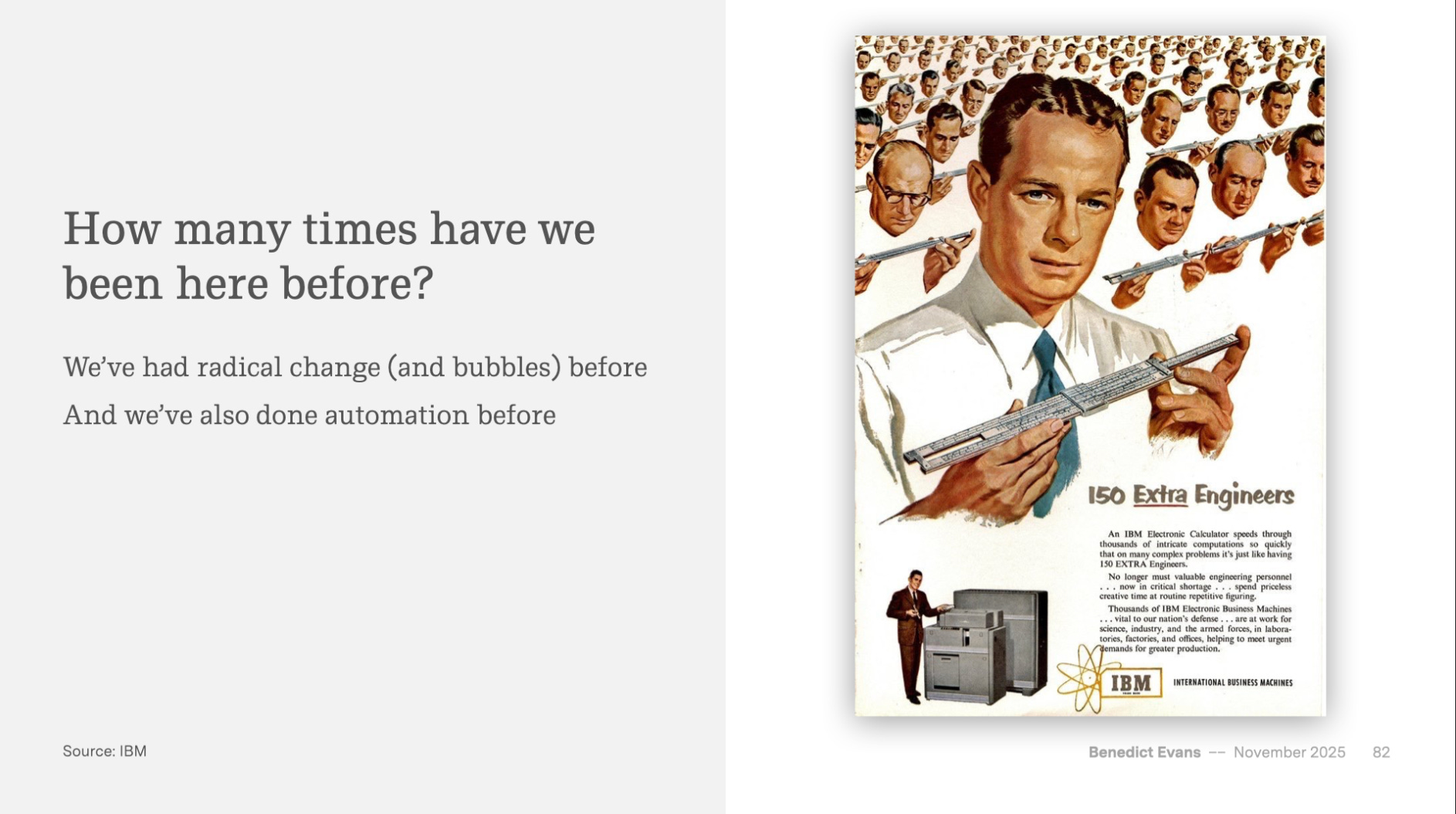
Generative AI, for all its unique and powerful characteristics, is the latest chapter in the long and repeating history of technological automation. Each new wave of technology feels revolutionary and unprecedented, yet it follows a familiar pattern of adoption, integration, and eventual invisibility.
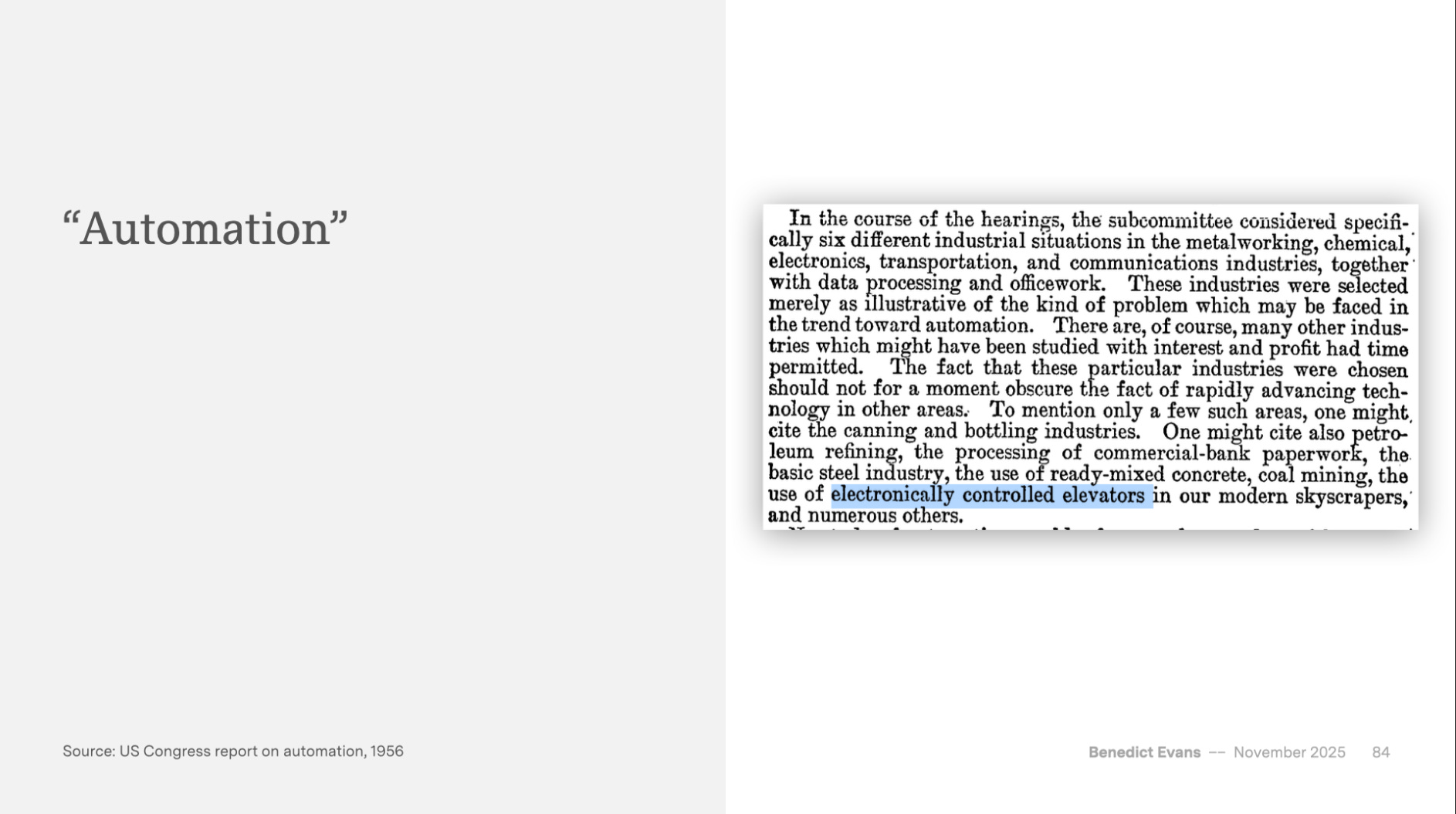
A 1955 U.S. government report on automation highlighted the “electronically controlled elevator” as a frontier technology.

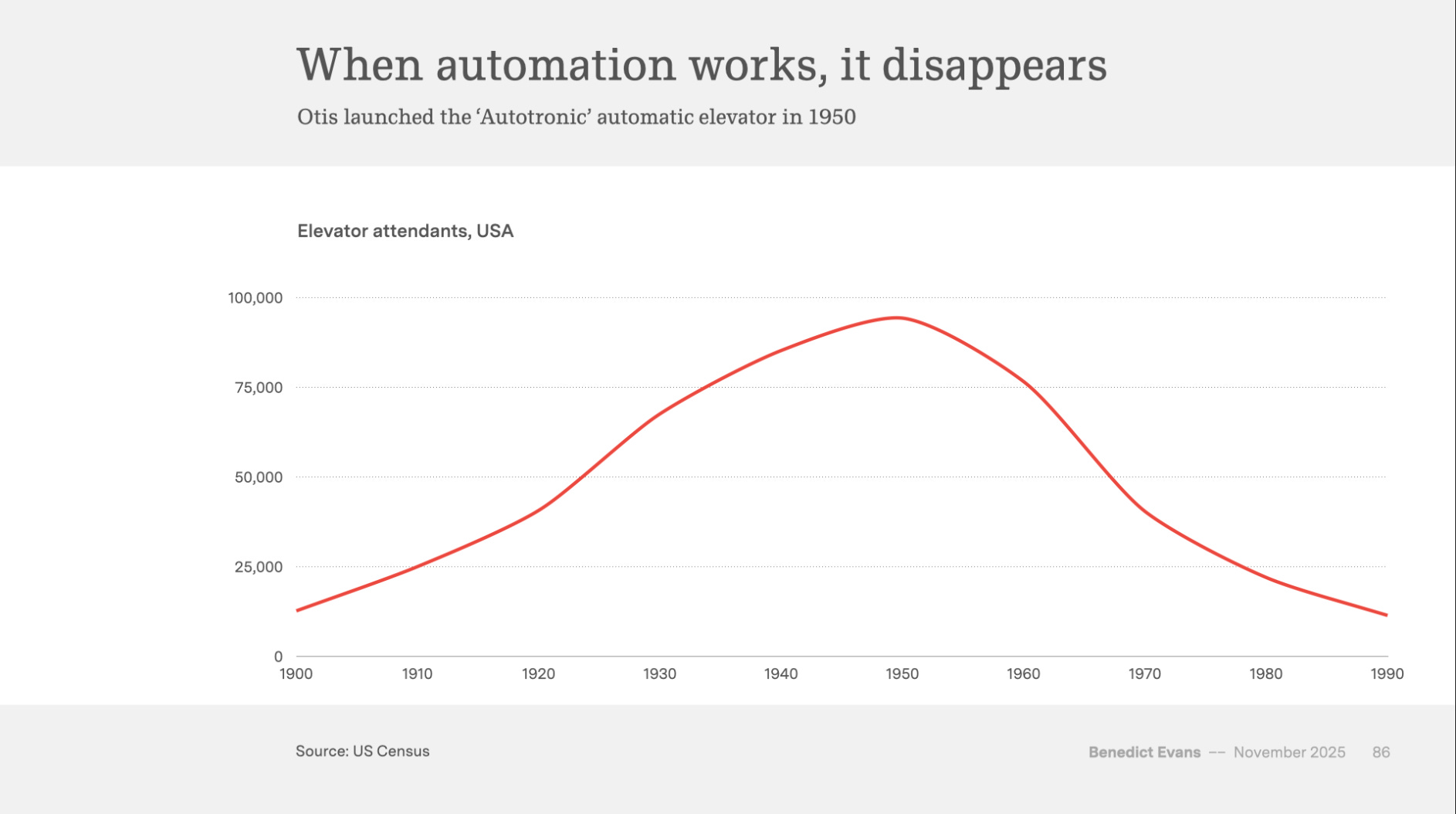
This innovation automated a job—the elevator attendant—that was once commonplace. Today, the automated elevator is so ubiquitous that we call it a “lift.”
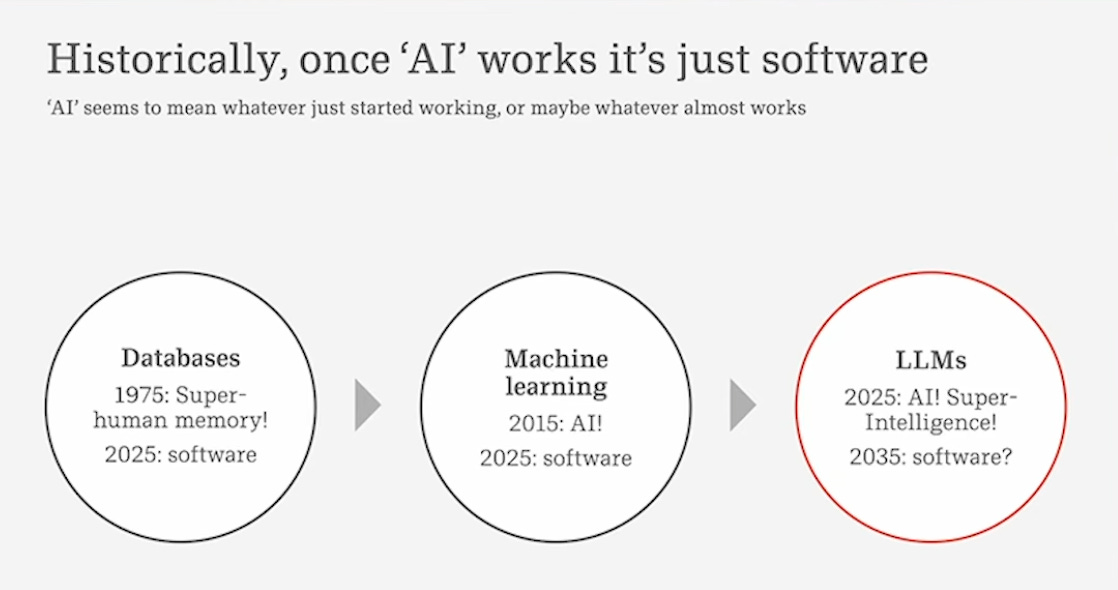
We have forgotten that the world was ever different. This cycle was perfectly captured by computer scientist Larry Tesler in 1970: “AI is whatever machines can’t do yet.” Once a task is successfully automated and integrated into our daily lives, we cease to see it as artificial intelligence. It becomes part of the baseline, the new normal. The world is permanently changed, the technology disappears into the background, and the cycle of innovation begins again with the next platform shift.
The Old Stuff is Still Here
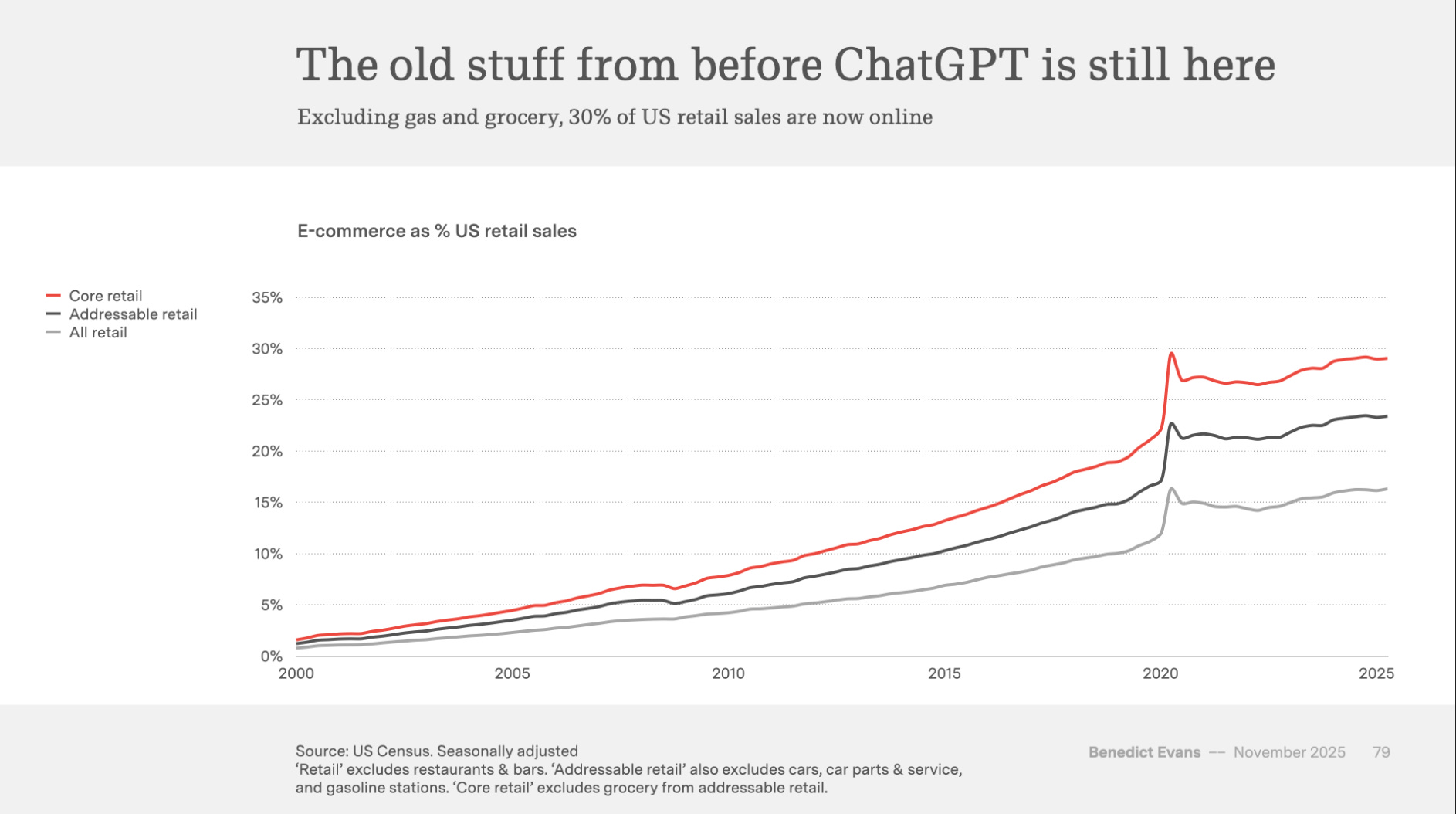
While generative AI represents the latest platform shift, it exists alongside “the old stuff” that continues to mature and “other new stuff” that has been in development for years. For example, e-commerce is not a new concept, yet it still only accounts for 30% of U.S. retail sales (excluding gas and grocery) and continues to grow.
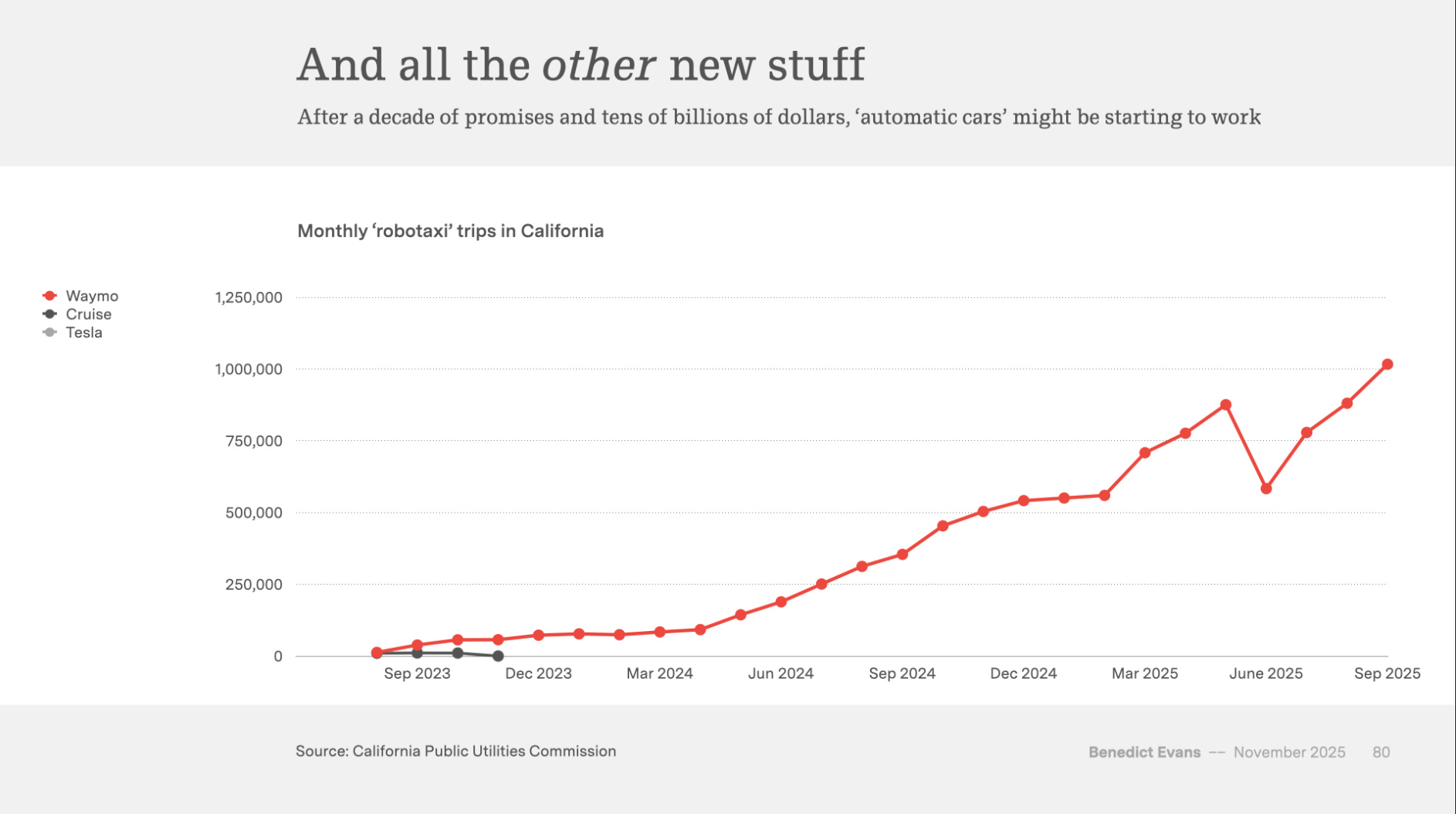
At the same time, long-gestating technologies like autonomous “robotaxis” are finally beginning to work after a decade of investment, with Waymo seeing a significant rise in monthly trips.
Other emerging “new stuff” includes the development of humanoid robots and augmented reality glasses.

It is Still Too Early
We are currently in an early and uncertain phase of Generative AI, characterized by a significant “engagement gap” where users experiment with tools like ChatGPT occasionally rather than making them a part of their daily life.
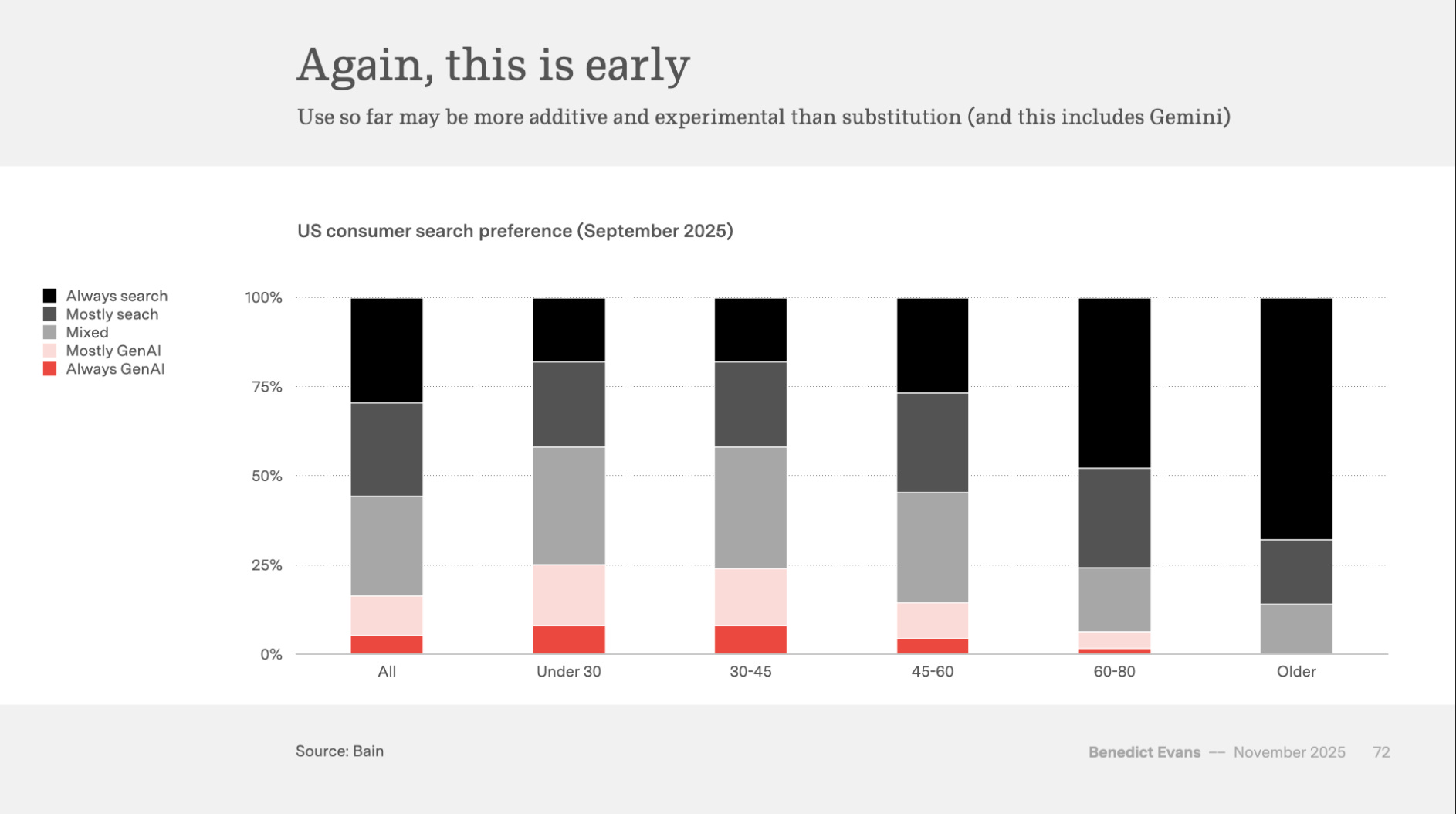
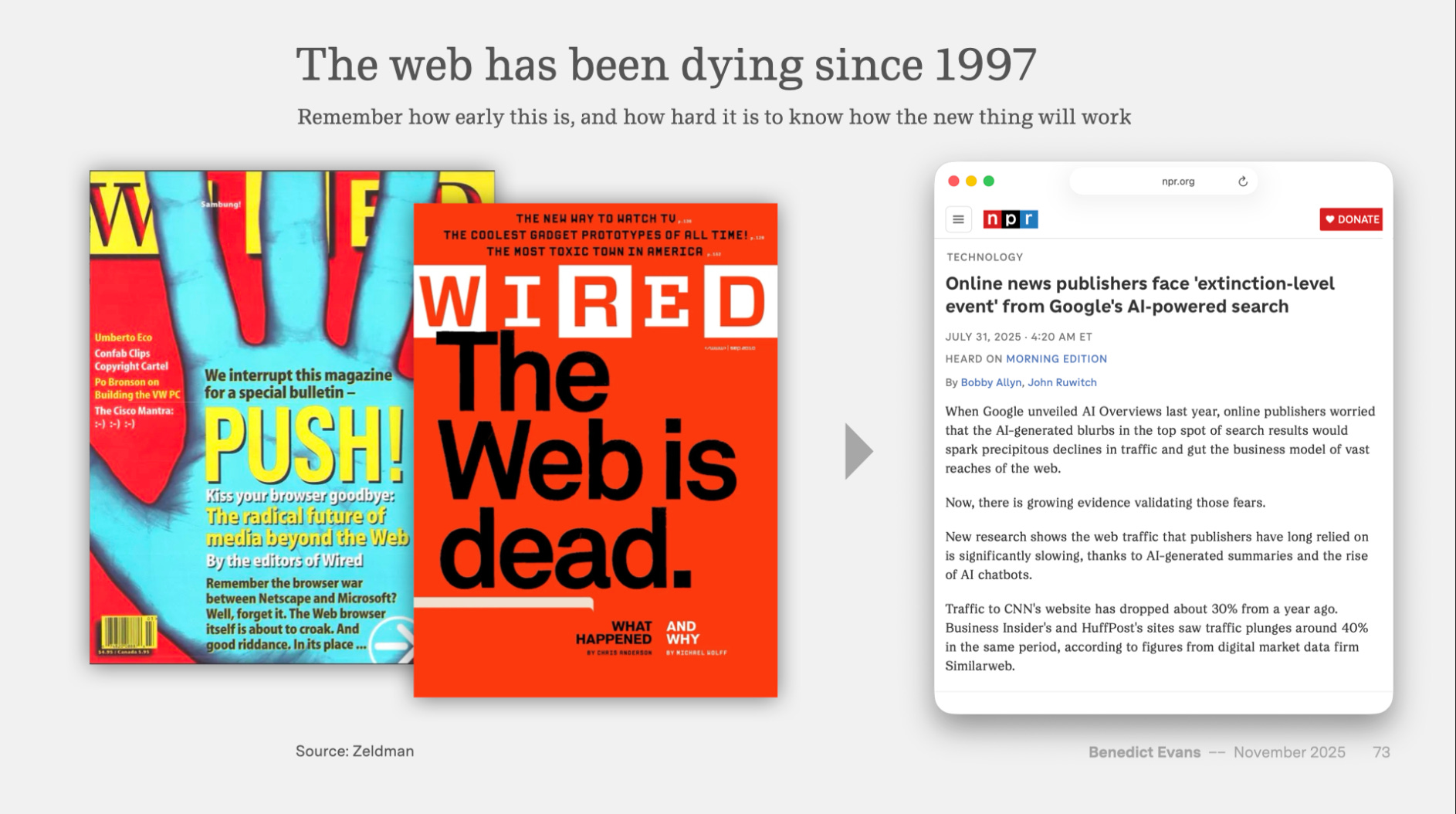
This stage is similar to the internet in 1997, when it was similarly unclear which business models or ideas would eventually succeed, leading to high levels of noise, hype, and “vibes-based forecasting”. Because the physical limits of AI are unknown, predicting its future is difficult, bubbles are expected, and early leaders are likely to disappear before the “dust settles” and the technology becomes a basic part of daily life.
More lessons from The Economics of AI course
Let us know what you think
How do you use AI for work or personal reasons? Is it successful? What about your company?
Did we miss any other ways we should be thinking about AI?
What other businesses and industries do you think will be disrupted? How and why?
Share our community with others
We are building a community of innovators and proactive problem-solvers. Our aim is to establish a business and innovation incubator that supports individuals eager to innovate—helping them get started, connect with like-minded people, form teams, secure funding, and transform their ideas into tangible solutions.
Disclaimer
We reserve the right to change our minds about anything published in The Golden Age newsletter as new information becomes available.
Nothing produced under The Golden Age brand should be considered investment advice. The content of this publication is for educational and entertainment purposes only, and does not claim to be, nor is it intended to be, financial, legal, accounting, tax, or investment advice.
The investments or strategies discussed may not be suitable for you, as they do not consider your specific investment objectives, financial situation, or needs, and are not meant to provide personalized investment guidance. Before making any investment or trade, evaluate if it is appropriate for you and consider consulting your own financial or investment advisor.
The authors of this publication are not licensed investment professionals.
Views expressed on The Golden Age are solely those of the editors and not of any affiliated firm or organization.
Always do your own research before investing.